Disclaimer: This article is for informational purposes only. We recommend speaking with a senior property advisor before making any final decisions.
Key Takeaways
| Factor | Invest in Land | Invest in a Villa in Bali |
| Main investment goal | Capital appreciation and future development | Rental income, personal use, and resale |
| Income potential | Usually no income until developed or leased | Can generate income after purchase and licensing |
| Initial complexity | Land due diligence and development planning | Property, building, permit, and rental due diligence |
| Ongoing costs | Taxes, security, maintenance, and lease obligations | Repairs, staff, utilities, management, taxes, and marketing |
| Construction risk | High if you build later | Lower if the villa is complete, but defects may exist |
| Liquidity | Depends heavily on title, location, and remaining term | Depends on property quality, legal status, and buyer demand |
| Best suited to | Patient investors and developers | Investors seeking operational cash flow |
| Main risk | Buying unsuitable land, fail to exit, or facing development restrictions | Low occupancy, poor management, or incomplete permits |
Investing in Bali property is not limited to villas. Many foreign investors are also drawn to land because it offers flexibility and the potential for long-term value growth.
So, which is the better choice for you: investing in land or a villa in Bali? Which is easier to access, and which could give you a better return?
Both options have their own costs, legal requirements, income potential, and risks. Let’s take a closer look at each one.
Which Type of Property Is Best for Your Investment in Bali?
From our perspective as a real estate agency, investing in a Bali villa can be a more practical option for foreign investors.
A completed and legally operational villa can start generating rental income sooner, so you don’t have to rely entirely on a long-term hold-and-exit strategy—which can become more complicated with leasehold property as the remaining lease term gets shorter.
Investing in a completed villa can also help you avoid much of the development process, including the time and additional costs involved in architectural design and construction.
That said, it always depends on your circumstances and investment goals. Land can still be a suitable option if you:
- Have a longer investment horizon.
- Want to create a distinctive villa or hospitality concept.
- Are comfortable navigating legal and construction processes.
Remember, there is no single best property type for every investor. Always match the investment to your objectives and risk profile first.

Can Foreigners Buy Land or Villas in Bali for Investment?
Yes, foreigners can buy land and villas here. However, you usually cannot own Indonesian freehold land, called Hak Milik, in your own name.
For both land and villas, you can invest using several alternative structures:
- Leasehold (Hak Sewa) – can be used by anyone, including tourists. It’s generally simpler and less expensive.
- Right to Use (Hak Pakai) – available to eligible foreign individuals who meet Indonesian requirements, including applicable residence and immigration conditions. It is intended for residential use only.
- PT PMA with HGB – suitable for commercial purposes.
The best structure always depends on your investment goals.
Read More: Do You Need a Specific Visa to Buy a Villa in Bali?
Pros and Cons of Investing in Land & Villas in Bali
| Factor | Land Investment | Villa Investment |
|---|---|---|
| Income Potential | No immediate income until the land is developed or used for an approved activity | Can potentially generate rental income soon after purchase |
| Capital Appreciation | Est. 7–13% / year | Est. 5–8% / year in established areas; 15–25% / year in high-demand emerging micro-markets |
| Development Flexibility | High flexibility | Lower flexibility because the property is already built, although renovation or repositioning may be possible |
| Upfront Cost | Lower initial entry cost | Typically higher because the price includes the building, furniture, landscaping, and other improvements |
| Time to Returns | Generally longer | Potentially faster because a completed villa can begin operating sooner |
| Financial Forecasting | Returns depend heavily on future development costs, timelines, and projected performance | Easier to model if the villa has verifiable occupancy, revenue, expenses, and booking history |
| Generally Suited To | Investors comfortable with a longer timeline who want more control over what gets developed | Investors looking for a more ready-to-operate asset with potential rental income and less construction involvement |
Read More: Most Profitable Business to Invest in Bali for Foreigners (2026 Update)
Is It Cheaper to Buy Land or Turnkey Villas in Bali? Costs Breakdown
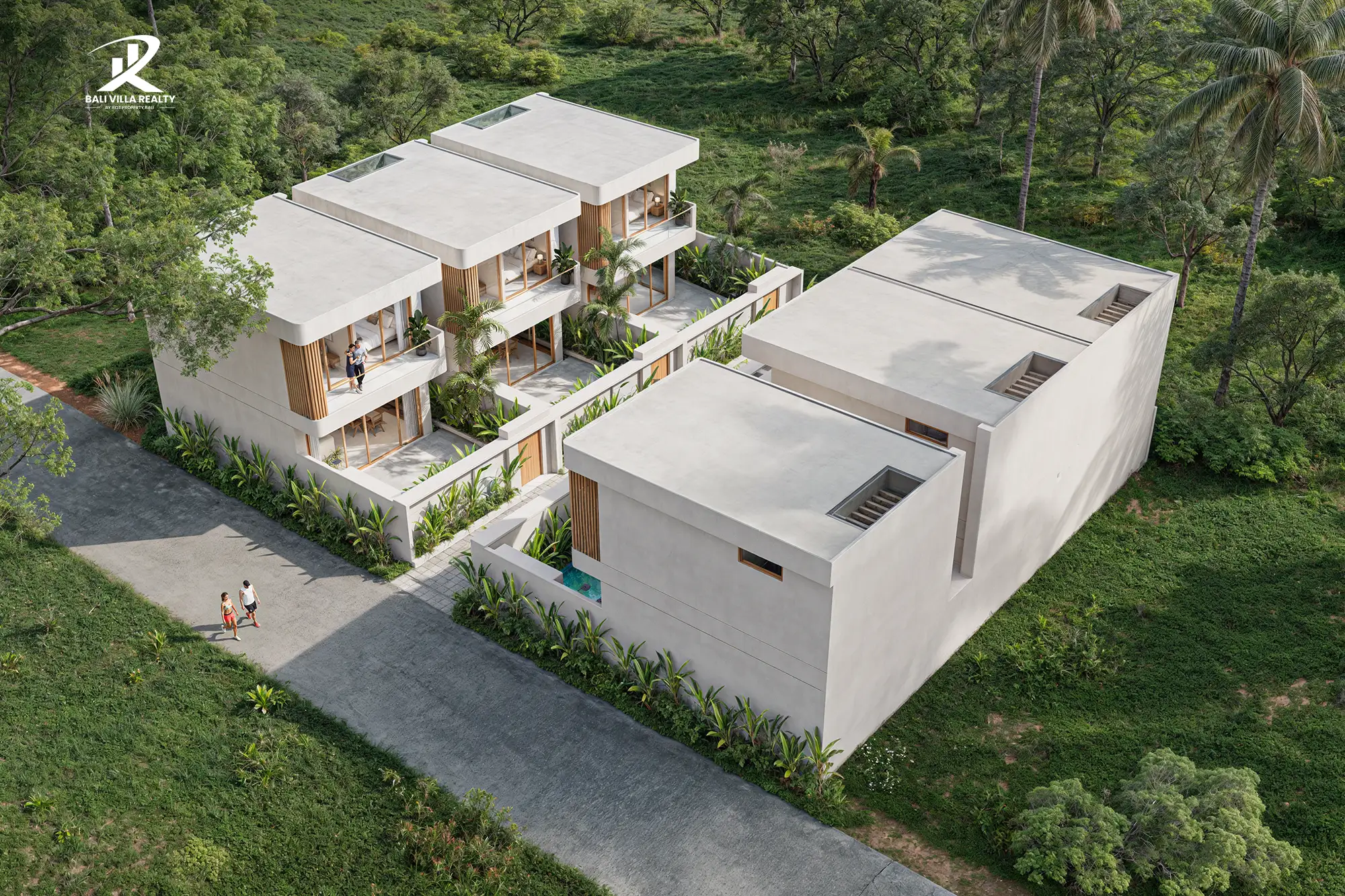
Land and villas come with different costs. For land investment, you typically pay per sqm, with prices generally ranging from $30 to $800 per sqm (or $3,000 to $80,000 per “are”—a local Balinese unit of measurement equal to 100 m²). Here are the details:
- Base land cost: $30 to $800 per sqm (always remember that land prices vary by area. Check our Bali property prices guide for a detailed breakdown).
- If you buy via leasehold:
- Leasehold income tax (PPh): 10%–20% of the lease value (By law, this is an income tax levied on the seller. However, in practice, Bali sellers often quote prices as “net,” meaning they may try to pass this cost on to the buyer. Always clarify this upfront)
- Notary / PPAT fee: 1%–2.5% of the lease value.
- Total Estimated Leasehold Transaction Add-on: 2%–4% (assuming the seller pays their own tax).
- If you buy via PT PMA:
- Buyer’s Land Acquisition Tax (BPHTB): 5% of the transaction value.
- Seller’s Income Tax (PPh Final): 2.5%, paid by the seller.
- Notary & Land Deed Official (PPAT) Fee: 0.5%–1% (regulated cap of 1%, often split between buyer and seller).
- Value Added Tax (PPN): 12% (only applies if you are buying land from a taxable corporate entity or developer—not between private individuals).
- Total Estimated Freehold Transaction Add-on: 7%–15%+, depending on PPN applicability and notary negotiations.
In addition, if you’re purchasing land and planning to develop it, you’ll need to budget for architectural and construction services. Once the building is completed, you’ll also need to account for property management and marketing.
If you buy a turnkey property instead, you’ll typically only need to handle ongoing villa management costs.
Read More: What Are the Annual Real Estate Taxes in Bali? Full Breakdown
Let’s Compare Land vs Villa Investment in Bali
Below is a simplified comparison between investing in leasehold land and investing in a leasehold villa in Bali. The figures are illustrative rather than a guaranteed investment forecast. Actual numbers can always vary.
Let’s say your property investment has the following assumptions:
| Assumption | Details |
|---|---|
| Location | Canggu, Bali |
| Land area | 200 sqm |
| Lease period | 25 years |
| Land lease price | $500 per sqm |
| Total land lease value (land area × land lease price) | $100,000 |
| Currency | US dollars |
| Ownership structure | Leasehold |
| Investment objective | Long-term rental income and capital recovery |
| Average occupancy assumption | 65% |
| Management fee | 20% of gross rental revenue |
| Leasehold transaction add-on | 3% of lease value |
This case study assumes that the buyer pays the agreed lease value plus a 3% buyer-side transaction allowance, covering notary, documentation, and related costs.
Scenario A: Invest in Leasehold Land
The investor leases 200 sqm of land for 25 years but does not immediately construct a villa. Here’s the investment value:
| Cost item | Calculation | Estimated cost |
|---|---|---|
| 25-year land lease | 200 sqm × $500 | $100,000 |
| Notary and transaction allowance | 3% × $100,000 | $3,000 |
| Due diligence and legal review | Estimated allowance | $2,000 |
| Total investment | $105,000 |
Investing in land means you won’t generate income unless the land is subleased or developed. However, if you buy land and hold it for several years, its value could increase as development in the surrounding area grows. This could create an opportunity for capital gains.
Now, if the investor later develops the land into a villa, additional costs may include:
| Future development item | Illustrative estimate |
|---|---|
| Architectural design and engineering | $15,000 |
| Permits and technical documentation | $10,000 |
| Construction of a 2-bedroom villa | $180,000 |
| Furniture and equipment | $25,000 |
| Landscaping and swimming pool | $30,000 |
| Pre-opening marketing and setup | $5,000 |
| Additional development cost | $265,000 |
The total investment would therefore become: $105,000 + $265,000 = $370,000
You need to understand how to exit safely if you want to invest in land. Foreign investors typically use leasehold structures, and the value of a leasehold asset can decrease as the remaining lease term gets shorter.
For example, if you lease land for 25 years and the land experiences 7% capital appreciation after 15 years, its actual market value could still be lower than expected because only 10 years remain on the lease.
If you want to maintain the property’s value, you may need to renew or extend the lease—which adds additional costs. The value compression caused by a shorter remaining lease term can offset a significant portion of that 7% capital appreciation.
Scenario B: Invest in a Leasehold Villa
In this scenario, the investor acquires a completed, furnished, and rental-ready two-bedroom villa on the same 200 sqm leasehold site. Here’s the initial investment:
| Cost item | Calculation | Estimated cost |
|---|---|---|
| 25-year land lease | 200 sqm × $500 | $100,000 |
| Notary and transaction allowance | 3% × $100,000 | $3,000 |
| Due diligence and legal review | Estimated allowance | $2,000 |
| Villa construction | Turnkey construction estimate | $180,000 |
| Furniture and equipment | Estimated | $25,000 |
| Swimming pool and landscaping | Estimated | $30,000 |
| Pre-opening marketing and setup | Estimated | $5,000 |
| Total initial investment | $345,000 |
This scenario assumes that the villa is completed and legally ready to operate. Here are the rental revenue assumptions:
| Assumption | Calculation | Result |
|---|---|---|
| Average nightly rate | Assumed | $250 |
| Occupancy | 65% × 365 nights | 237 nights |
| Gross annual rental revenue | 237 × $250 | $59,250 |
With operating costs estimated as follows:
| Operating cost | Calculation | Estimated annual cost |
|---|---|---|
| Villa management | 20% × $59,250 | $11,850 |
| Cleaning and guest services | 8% × $59,250 | $4,740 |
| Utilities and internet | Estimated | $4,000 |
| Maintenance and repairs | Estimated | $4,500 |
| Pool and garden maintenance | Estimated | $3,000 |
| Insurance, administration, and local costs | Estimated | $2,000 |
| Marketing and booking-related costs | 5% × $59,250 | $2,963 |
| Property tax and miscellaneous costs | Estimated | $1,500 |
| Total annual operating expenses | $34,553 |
Your approximate net operating income may therefore be: $59,250 − $34,553 = $24,697 per year
This is before financing costs, investor income tax, and major capital expenditures.
Your estimated net return would be: $24,697 ÷ $345,000 × 100% = 7.2%
Estimated payback period: $345,000 ÷ $24,697 = 14 years

Conclusion
In the end, make sure to review costs, legal rights, income potential, development risks, operating expenses, and long-term goals. This will help you decide whether a plot of land or a turnkey villa is the better choice for you.
Still have questions or ready to explore options based on your budget? Share what’s on your mind, and let’s talk about it in more detail—all free, with no commitment required.
FAQ
Building a villa in Bali typically costs around $1,000 to $1,800 per square meter (sqm) for an investment-grade property built to Western standards. For a standard 200 sqm (2,150 sq ft) villa, that puts the base construction cost at approximately $200,000 to $350,000, excluding land, furnishings, and legal permits.
Real estate development and short-term villa rentals are among the most profitable investment sectors in Bali, with potential annual rental yields ranging from 10% to 15%.