Disclaimer: This article is for informational purposes only (figures and data may change over time), and is not intended to replace consultation with professional advisors. We strongly recommend speaking with a qualified senior property advisor before making any final investment decisions.
Key Takeaways
- Apartments offer a lower entry point than villas, with average prices ranging from around $1,950 (≈ IDR 33M) to $7,380 (≈ IDR 125M).
- Based on our property listing data, you can find a 2-bedroom apartment in Umalas starting from around $75,000 (≈ IDR 1.26B). In comparison, a 2-bedroom villa in Umalas may cost around $245,000 (≈ IDR 4.11B)—a difference of roughly $170,000 (≈ IDR 2.85B).
- Bali apartments generate annual ROI of 8–15%, with an average net yield of around 11.25% — well above the global average of 5%.
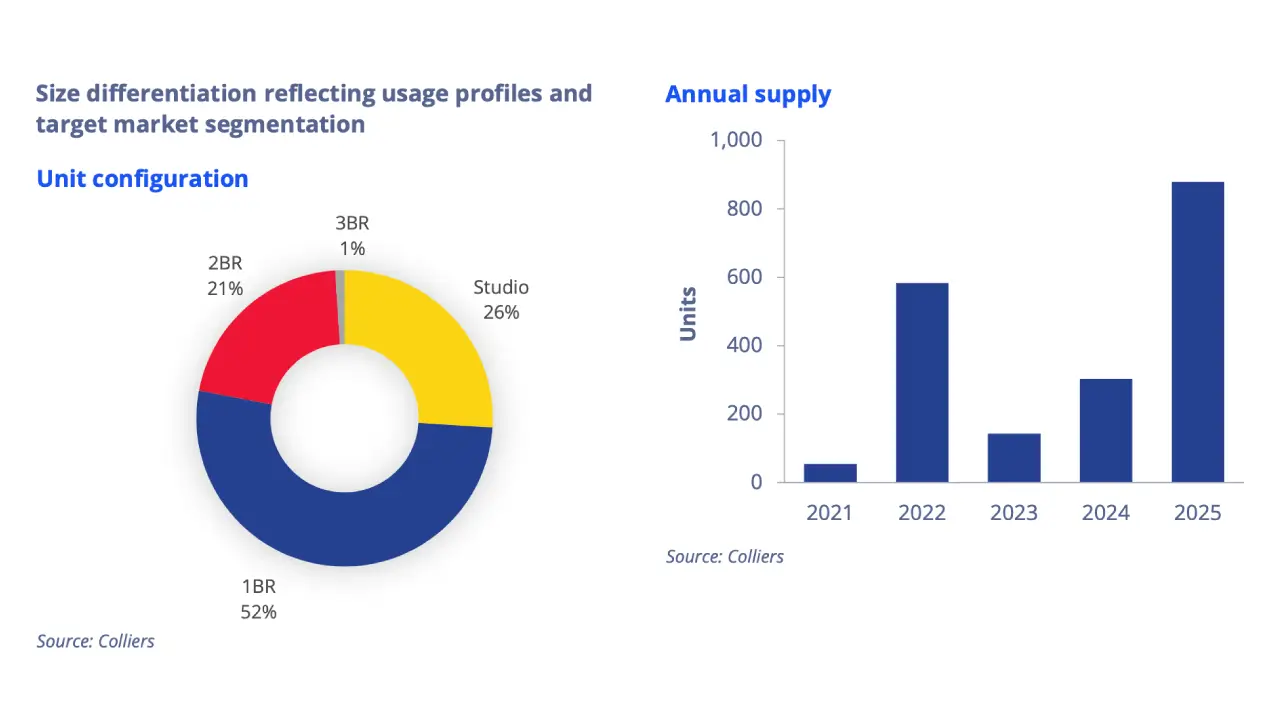
- The most in-demand apartment unit type is the 1-bedroom apartment, making up 52% of total supply, followed by studios at 26%.
- Long-term renters—expats, digital nomads, and retirees—drive more stable, year-round occupancy compared to short-term holiday rentals.
- Running a commercial apartment rental requires a PT PMA, with a minimum paid-up capital of IDR 2.5 billion (≈ $157,000 USD).
Bali's property market has long been dominated by villas. But as competition grows and entry prices climb, more foreign investors are quietly turning their attention to a different asset: apartments.
Apartments in Bali are still an emerging category—with lower entry prices and simpler management—which is exactly what makes them an interesting addition to your portfolio.
But like any investment, knowing how to invest in Bali apartments the right way matters more than simply finding a unit you like.
Don't worry, this guide walks you through everything, from legal steps and apartment types to what realistic returns look like.

Can a Foreigner Buy an Apartment in Bali?
Yes. Foreigners can buy an apartment in Bali rather than renting.
It's important to note that direct freehold ownership for foreigners is not permitted under Indonesian law. So, most foreign buyers secure long-term rights through different ways, such as leasehold (Hak Sewa), Hak Pakai, or a PT PMA structure. Each detail can be read here: Can Foreigners Buy Property in Bali? Full Guide for You
If you intend to run a commercial apartment rental, then you require a PT PMA (Foreign-Owned Company).
How to Invest in Apartment Buildings in Bali (Practical Steps)
Investing in an apartment building in Bali involves a structured process to ensure your investment is legally protected and operationally viable. Here's the practical steps to execute it:
1. Establish Your "Investment Vehicle"
As we've mentioned earlier, if you intend to run a commercial apartment rental, you'll need a PT PMA.
So, start by registering your foreign-owned company with the Indonesian Investment Coordinating Board (BKPM). You can see the full steps here: The Complete PT PMA Indonesia Guide for Foreign Investors (2026)
In addition, you'll need to meet a minimum paid-up capital of IDR 2.5 billion (≈ $157,000 USD).
Once your company is registered, apply for an NPWP—Indonesia's Tax Identification Number—which is required for all official contracts and transactions.
2. Choose the Right Apartment Type
Apartments in Bali generally fall into several categories:
- Small apartment complexes (1-bedroom units): This is one of the most common apartment types in Bali. These 1-bedroom units are usually designed within a single complex under one legal setup. Entry costs are higher compared to individual units, but they offer more control over operations and stronger long-term value.
- Strata-title apartment units: These are single units within a larger building, similar to condominiums in many other countries. You own the individual unit while sharing common facilities such as parking, elevators, and security. This option is popular for long-term rentals and for resale to other investors or end users.
- Serviced apartments: These units are professionally managed and often come with hotel-style services such as reception, housekeeping, and maintenance. Rental income tends to be more stable, but management fees are usually higher and owners have less operational control.
Each apartment type comes with different regulations, management structures, and income potential.
For example, small 1-bedroom complexes and strata-title units give you more direct control over the property and day-to-day decisions. Serviced apartments, on the other hand, are handled entirely by a professional management team.
From an income perspective, serviced apartments often allow higher rental rates, but the target market can be more limited. In contrast, small 1-bedroom units and individual apartment units usually attract a wider pool of renters because rental prices are more affordable and flexible.
3. Analyze Your Key Buyer Profile
A cheap apartment is not always a good investment. Instead of focusing only on price, try to learn learn about your key buyer profile.
Today’s market is fueled by a diverse mix of tourists, digital nomads, long-stay expatriates, and individual investors (Colliers’ 2025 report). But you don’t have to target everyone. Instead, focus on the type of audience that is most drawn to your chosen area.
For example, areas with strong co-working scenes (like Canggu and Ubud) tend to attract young digital nomads. Your apartment should adapt to their needs, such as including comfortable working spaces and being close to spots favored by young people.
But if you want to invest in other areas like Umalas and Nusa Dua, you’ll attract a different type of tenant because these areas are popular with families. So you’ll need a different approach, such as adjusting the apartment layout, the number of bedrooms, and proximity to international schools.
4. Verify Apartment Zoning
Don’t forget to verify the land zoning. Bali is strict about zoning regulations, which determine the purpose of each area, such as green zones, tourism zones, commercial zones, and residential zones.
There are several ways to check this:
- Verify land zoning for free online through GISTARU.
- Purchase property through a legal real estate agent like Bali Villa Realty. Our agents and legal team always ensure that the land zoning of every apartment listing we offer is safe and legal to use (not in a green zone).
You should also confirm that the property has legal road access and available utilities such as water, electricity, and internet. Easy access and complete utilities make the property much more attractive to potential renters.
5. Run Due Diligence
This step involves a full legal audit of the property. The process typically includes authenticating the land certificate (Sertifikat Tanah) with the National Land Agency (BPN), verifying the seller’s legal authority, and auditing all permits related to the property.
To complete this process, you’ll usually need a specialized lawyer or a licensed notary (PPAT) to conduct the checks. But the process can be much easier with Bali Villa Realty. We have in-house legal specialists, licensed lawyers, and trusted notary partners who handle the due diligence for you.
This allows you to move forward with greater confidence while we take care of the legal checks and paperwork behind the scenes.
6. Preliminary Agreement and Deposit
Once everything checks out, it’s time to sign the LoI (Letter of Intent) or Purchase Agreement (PPJB). This step is done before a notary and outlines the price, payment terms, and transaction timeline.
After signing the agreement, you can proceed with the deposit. Typically, 10–30% of the property value is paid to secure the asset, often through an escrow account for additional safety.
7. Finalize the Transaction
There are several steps to finalize the transaction:
- Sign the Sale and Purchase Deed (AJB): The official transfer of rights is executed before a licensed notary (PPAT) once all conditions in the PPJB have been fulfilled.
- Settlement of Taxes and Fees:
- BPHTB (Buyer Acquisition Tax): 5% of the transaction value.
- Notary Fees: Typically 1% of the property value.
- Registration at BPN: The notary registers the transaction with the National Land Agency (BPN) to update the title under your PT PMA or Hak Pakai ownership.
8. Operational Licensing and Management
The process is not done after you buy the apartment. To legally run an apartment building as a rental business, you'll need to obtain some dedicated licenses:
- NIB (Business Identification Number): The official business registration issued through Indonesia’s OSS system that legally identifies and allows your company to operate a business.
- Operational license: Pondok Wisata for smaller properties (fewer than 5 bedrooms) or a Hotel License for larger developments.
- SLF (Certificate of Function): Document that certifies the building’s safety and functionality.
Many apartment owners in Bali also hire a local property management company to simplify operations. They typically handle bookings, daily maintenance, and Banjar (local community) relations on your behalf.
How Much is an Apartment to Buy in Bali?
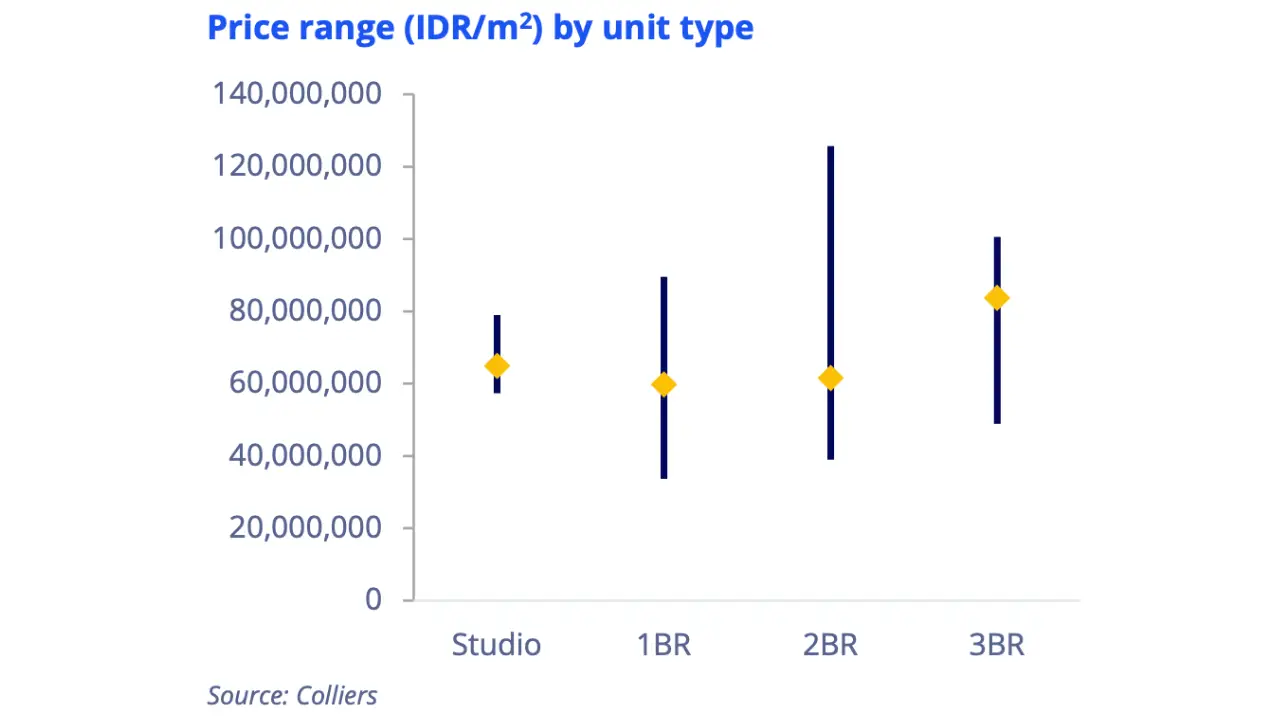
On average, apartments range from IDR 33 million (~$1,950) to IDR 125 million (~$7,380), with studio units typically being the most affordable and showing relatively stable pricing.
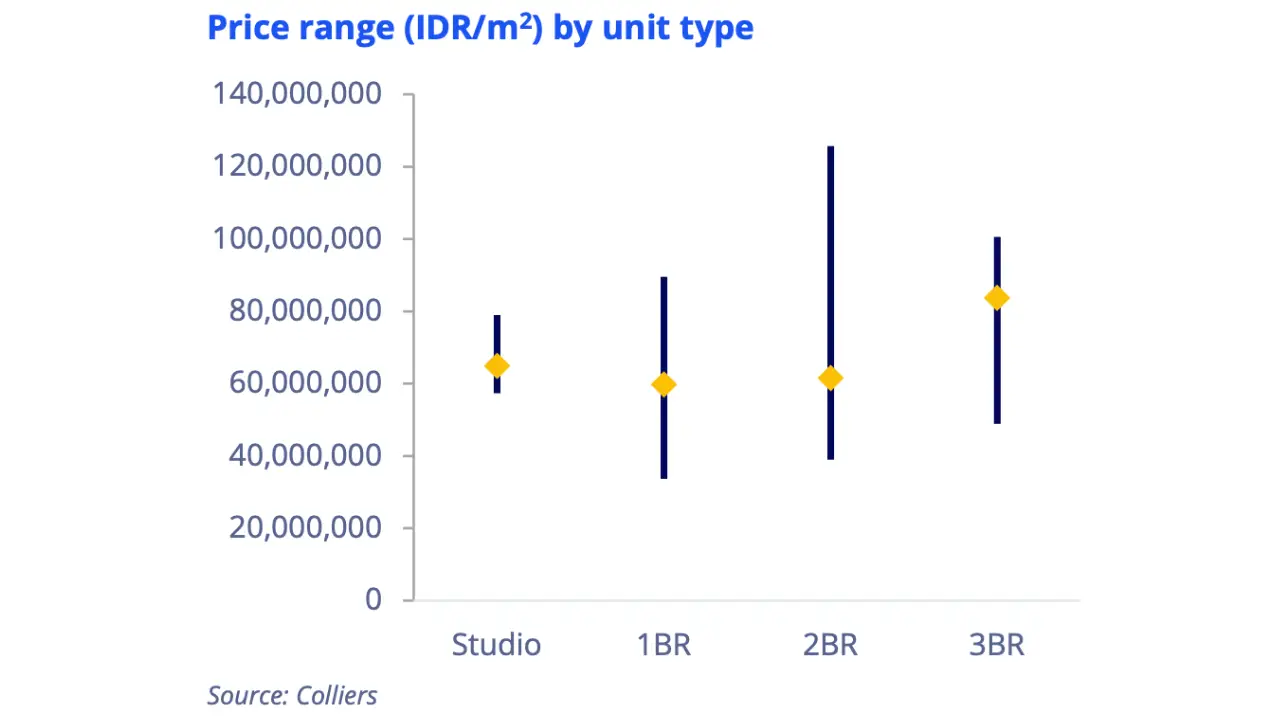
Apartment prices in Bali vary widely depending on location, unit type, and amenities. Larger units—such as 1- to 3-bedroom apartments—tend to have a wider price range due to differences in quality, size, and features.
On a price-per-square-meter basis, Bali apartments generally range from IDR 20 million (~$1,180) to IDR 80 million (~$4,700) per m², with the highest prices usually found in premium areas like Uluwatu, Seminyak, and Nusa Dua.
Now, if we compare apartments and villas, the price difference can be surprisingly large. For example, based on our apartment and villa listing data, you can get a 2-bedroom shared apartment in Umalas starting from around USD $75,000 (≈ IDR 1.26B).
Meanwhile, a 2-bedroom villa in the same area may cost around $245,000 (≈ IDR 4.11B). That’s a difference of roughly $170,000 (≈ IDR 2.85B).
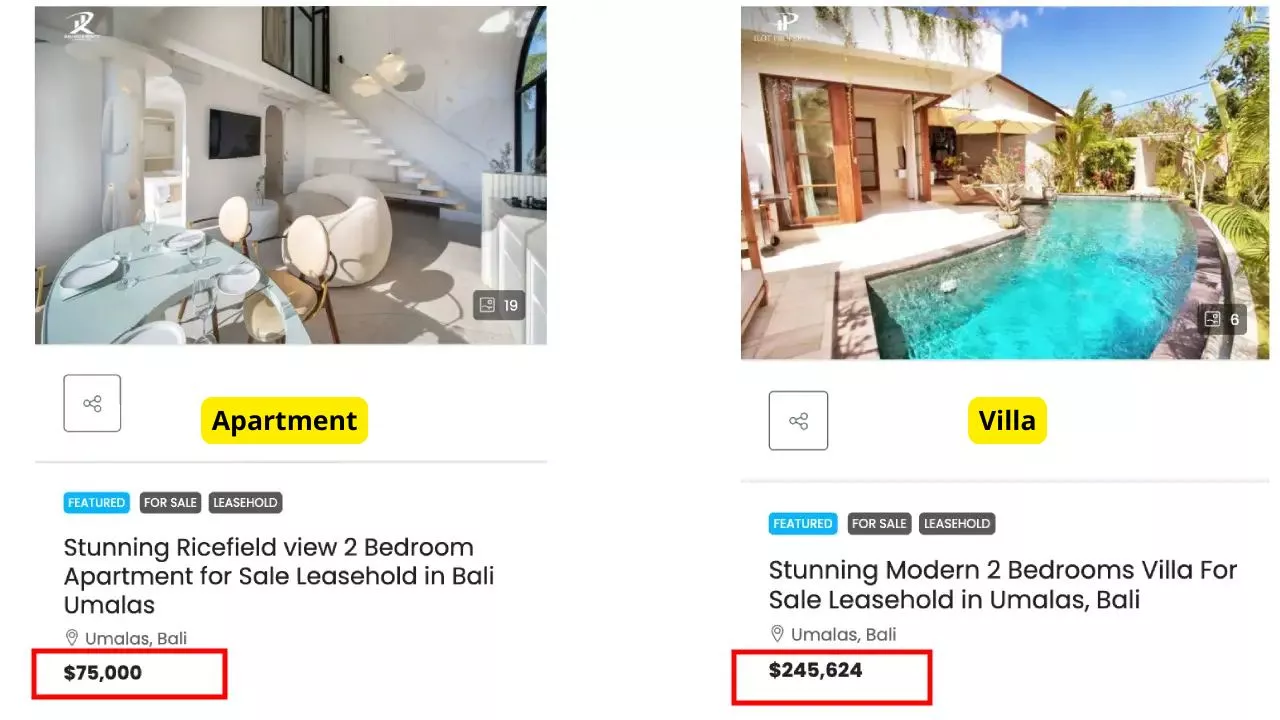
Apartment buildings still tend to start far below villa prices, making them an attractive option for first-time investors.
Explore Top Apartments in Bali — ROI Up to 12%
What Rental Yield Can You Expect from a Bali Apartment?
Apartment investment in Bali continues to deliver competitive returns, with ROI generally ranging between 8-15% annually—broadly in line with other property investment types on the island. The net yield may be approximately 11.25%. These figures are still considered attractive for investment.
The most sought-after unit type is the 1-bedroom apartment, representing 52% of total supply, followed by studios at 26%.
Apartment Supply & Prices in Bali (2025)
- Total supply in 2025: ~3,000 units
- Average price: IDR 33 million – IDR 125 million per unit (≈ USD ~$2,012 – ~$7,622)
- Price per m²: IDR 20 million – IDR 80 million/m² (≈ USD ~$1,220/m² – ~$4,878/m²)*
- Average occupancy rate: 45-66%
- Most expensive areas: Uluwatu, Seminyak, Ubud
- More affordable area: Canggu (larger supply, more standardized developments)
*Note: These prices are significantly lower compared to property markets in Singapore ($15,000–$30,000/m²) or Bangkok ($5,000–$10,000/m²).
Beyond just the unit itself, lifestyle and wellness concepts have become key differentiators. Renters today increasingly gravitate toward developments that offer curated amenities and a sense of community.
Read More: Bali Villa Rental Yield 2026: Here’s How Much You Can Expect
What are the Disadvantages of Apartment Investment?
Every investment has trade-offs, and apartments are no exception. Here's what to weigh carefully before committing:
- Ongoing maintenance fees: Apartment owners pay regular fees to cover shared facilities and building upkeep. These costs are unavoidable and directly reduce your net yield if not factored into your calculations upfront.
- Slower capital appreciation: Compared to landed properties like villas, apartments generally appreciate more slowly over time. Your stronger return is likely to come from rental income rather than resale value.
- Management fee erosion: Serviced apartments in particular come with professional management costs that can be significant. Depending on the arrangement, fees can consume 20–30% of gross rental income, meaningfully impacting returns.
- Oversupply risk: Certain areas in Bali—particularly popular corridors like Canggu—are seeing increasing apartment supply. High competition can suppress rental rates and increase vacancy periods, especially for poorly located or undifferentiated units.
- Limited space and privacy: Apartments offer less living space than villas and come with shared walls, common areas, and building regulations. This can affect tenant satisfaction and, in turn, retention rates.
- Building rules and restrictions: Most apartment complexes impose rules around renovations, subletting, pets, and additional occupants. These restrictions can limit your flexibility as an owner and may narrow your potential tenant pool.
- Lease expiry risk: For leasehold apartments, the remaining lease duration directly affects both rental income potential and resale value. A unit with fewer than 15 years remaining on its lease becomes significantly harder to sell or refinance. Learn more about the leasehold investment strategy to better protect your asset.
Conclusion
An apartment can be a solid investment in Bali, especially if you’re looking for steady long-term income with less day-to-day management. We hope this guide on how to invest in apartment buildings in Bali has given you clearer insight before taking your next step.
If you’d like to explore your options or have a more in-depth discussion, feel free to talk to us anytime. Our senior property specialist are happy to help you navigate Bali property investments smoothly, from planning to purchase.
FAQ
You can start with $100K, but the actual amount depends on the property type. Beyond the purchase price, you should also budget for legal fees, taxes, and ongoing maintenance costs. See the full calculation here: Cost of Property in Bali 2026: What You Need to Know
Bali is one of Southeast Asia’s stronger property markets, with well-located apartments generating net rental yields of 8–15%, supported by expat demand, infrastructure growth, and rising global interest.
Investing without capital is very unlikely. Most purchases require a significant upfront payment, and lenders or developers typically expect proof of sufficient funds before proceeding.
Typically 25–30 years, with options to extend.
Apartments earn money primarily through monthly or long-term rentals (3-12 month leases for steady, predictable income). Capital appreciation and lease resale value can add further returns over time.