Key Takeaways
- Renewal prices follow current land values, so they usually rise over time unless your original contract fixes a formula.
- Land leases are quoted per are (100 m²) per year. Prime areas such as Canggu and Seminyak can reach IDR 35–50 million per are per year.
- Budget extra for notary fees, taxes, and registration. These are separate from the payment to the landowner.
Leasehold renewal is the cost most Bali investors underestimate because it is priced at future land values rather than the price you originally paid. That said, there is no fixed cost to renew a Bali leasehold.
The renewal amount comes from negotiations with the landowner and generally follows the market land value at the time of renewal, multiplied by the plot size and the number of years extended.
However, knowing typical values by area still matters when estimating your final costs. This helps you make a better exit strategy.
How Is a Leasehold Renewal Priced in Bali?
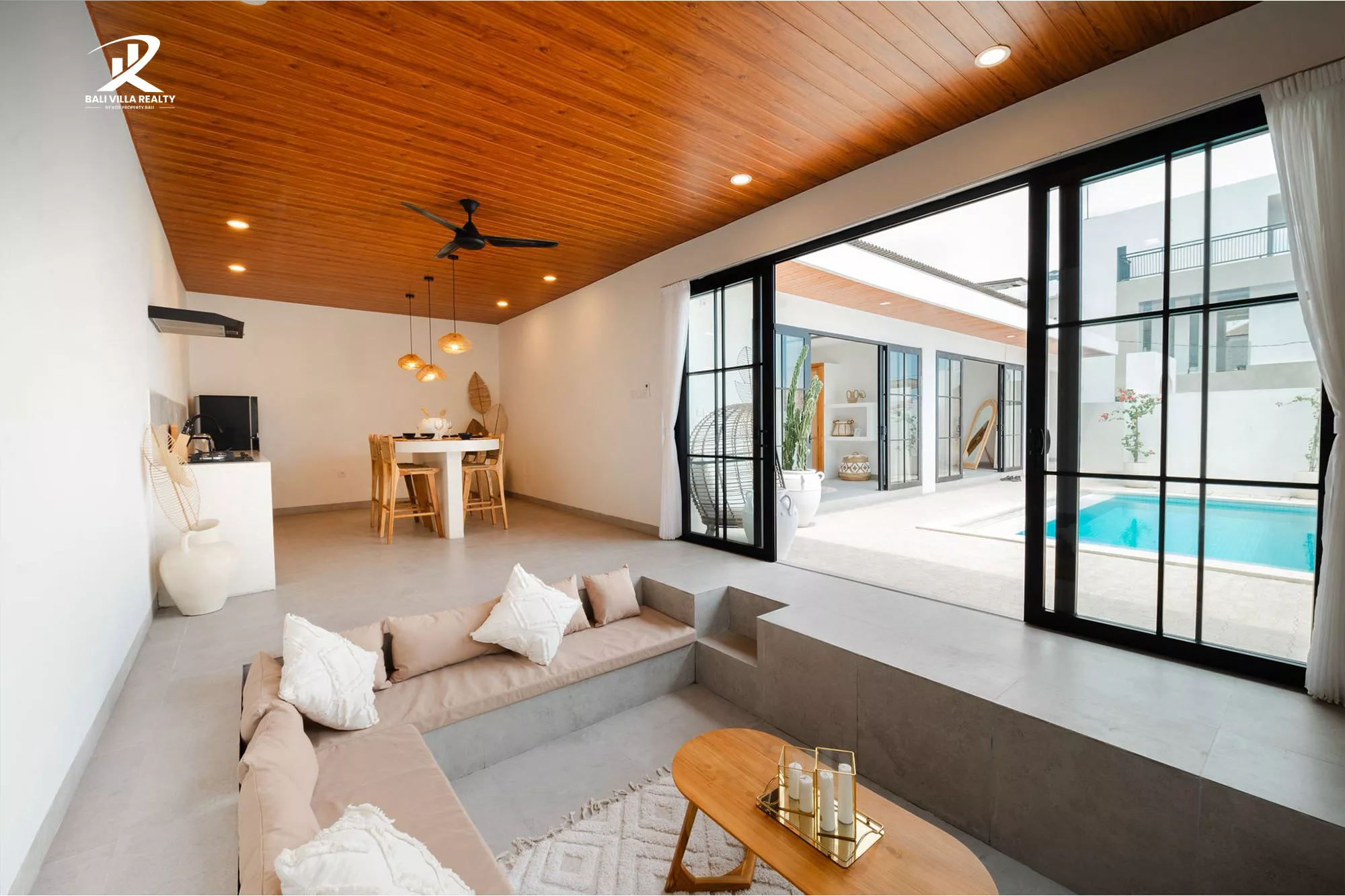
Leasehold renewal in Bali is priced based on the land rate per are (a unit of land measurement in Bali; 1 are = 100 sqm) per year, multiplied by the plot size and the number of years extended. The rate is based on what the market supports when you start negotiating, not what you originally paid. Unless your contract states a formula, the landowner holds most of the leverage.
As a rough estimate, a 5-are plot in prime Canggu at IDR 40 million per are per year, extended for 25 years, would cost: 40M × 5 × 25 = IDR 5 billion (about USD 330,000).
An investor who bought a lease years ago at lower land prices may face a much larger renewal bill than expected. Lease renewal costs depend on the land value at the time of renewal, so negotiating terms early can reduce risk.
Read More: 2026 Bali Property Price Guide: Villas, Land, Houses & Apartments
How Much Does Renewal Cost by Area?
| Area | Approximate Rate (IDR per are per year) | Approximate Rate (USD per are per year) | Estimated Renewal Cost (5 are × 25 years) |
| Canggu / Seminyak (prime locations) | IDR 35–50 million | USD 1,940–2,772 | USD 243,000–346,000 |
| Ubud / Jimbaran | IDR 10–25 million | USD 554–1,386 | USD 69,000–173,000 |
| Emerging areas (Tabanan, Kedungu) | IDR 3–10 million | USD 166–554 | USD 21,000–69,000 |
If you're still comparing options, you can also browse our Bali villa leasehold collection to understand how lease terms, locations, and prices vary across the market.
What Extra Costs Apply on Top of the Villa Renewal Fee?
Renewal involves costs beyond the property payment to the landowner, including notary fees, applicable taxes, and formal registration. A new notarial deed is generally needed for the extension.
| Cost | Typical range / rate |
| Notary and legal fees | Quotation-based; no single verified percentage for the combined services |
| VAT (PPN), applies when the lessor is a VAT-registered taxable entrepreneur | Generally an effective 11% of the taxable rental charge, calculated as 12% × an 11/12 tax base |
| Final income tax on land/building rent — PPh Article 4(2) | 10% of gross rental income |
| BPN registration | Not a standard registration cost for an ordinary lease agreement |
Worth Knowing for Bali Investors:
- Cost to Convert Leasehold Bali Property to Freehold
- Can Leasehold Be Inherited in Bali? A Deep Dive for Serious Investors
- Understanding Freehold vs Leasehold Property in Bali
Why Does Your Original Leasehold Contract Matter So Much for Renewal Terms?
Your original lease contract largely determines your renewal position. If it includes a pre-agreed renewal right or pricing method, you have much more certainty. If it does not, you negotiate from scratch, and a landowner is generally not required to renew unless the contract grants that right.
Two clauses are commonly used to protect lessees:
- Independent valuation: The renewal fee is set based on the average valuation of three independent, licensed appraisers at the time of renewal.
- Fixed price or formula: A fixed amount or percentage increase is agreed upon from day one. This removes uncertainty but can be harder to negotiate with landowners.
At Bali Villa Realty, our agents help clients negotiate lease agreements and extension terms directly with property owners.
We also provide a dedicated legal team and partner notaries to support due diligence and contract preparation, helping you navigate the transaction smoothly without having to coordinate separate professionals yourself.
Learn more about our services or reach out to discuss your needs anytime.
Conclusion
Leasehold property renewal costs are often negotiated in Bali, with the current land value used as the starting point. The most effective protection is to include a clear renewal clause in your original leasehold contract.
You don’t have to navigate this process alone. Bali Villa Realty can help make your leasehold transaction smoother. Let us know what you need, and we'll take it from there.
FAQ
Yes. A landowner is generally not obliged to renew unless the original contract grants a renewal right.
The lease ends and, unless the agreement says otherwise, the property returns to the landowner. What happens to the villa and improvements depends on your contract and applicable Indonesian law.
Yes, you can still negotiate a new lease with the landowner after expiry, but you do not automatically have the right to another fixed term.
A "99-year leasehold" in Bali is typically not one 99-year contract. It is usually split into an initial term (for example, 30 years) followed by one or two renewals, and each renewal is generally priced based on the land value at that time.
So the extension cost is not paid once but typically two or three times across the full period.