Key Takeaways
- Choosing the perfect villa in Bali starts with location and lifestyle, not the villa itself—each area offers a very different experience.
- Always define your purpose first (holiday, long stay, family, or investment) so you can find a villa that truly fits your needs.
- Focus on value, not just price—consider hidden costs, comfort, and how the villa supports your daily activities.
- Pay attention to amenities and logistics, including WiFi, layout, road access, and distance to key places, as these directly affect your stay.
- Always verify before booking and consider getting help from a trusted agent to avoid mistakes and save time.
Searching for a villa in Bali sounds simple… until you see thousands of attractive listings and price options. Every listing promises the “perfect stay,” but behind those photos, it’s hard to tell which ones are truly comfortable, safe, and legit.
If you’re trying to figure out how to choose the perfect villa in Bali, the real challenge is having too many options. And if you’re not careful, choosing the wrong villa can cost you time, money, and peace of mind.
Don't worry. In this guide, we’ll walk you through a simple, practical way to find the right villa based on your real needs. This will help you make a confident decision and avoid common mistakes.
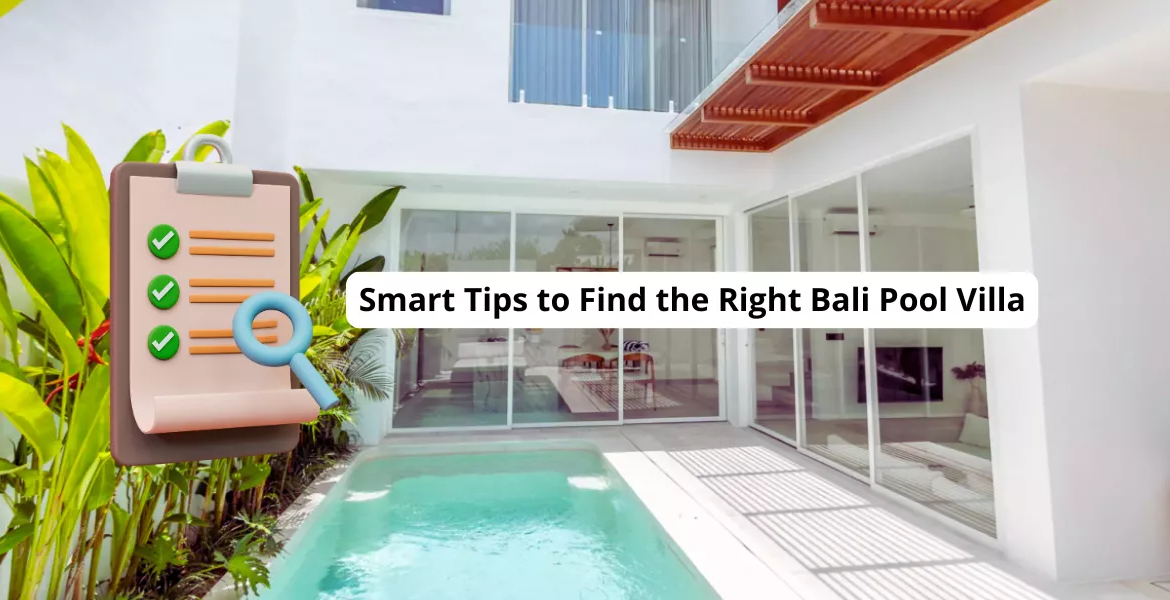
1. Start with Location
Don’t pick a villa first. Pick the lifestyle you want during your Bali vacation first instead, and then you can find the right location and villa to book. This makes your stay more comfortable and aligned with what you expect.
One of the biggest misconceptions is thinking Bali is small and easy to move around. In reality, your trip experience can feel completely different depending on where you stay.
For example, staying in Canggu puts you right in the middle of cafes, beach clubs, and traffic. It’s social, energetic, and very popular.
But if you move just 30–40 minutes away to Ubud, the atmosphere changes completely: more greenery, quieter roads, and a slower pace of life.
Read More: Best Areas to Stay in Bali for a Week
2. Define Your Purpose
Next, define your purpose for staying in that location. Each situation leads to a different “perfect villa” definition:
- If this is a short holiday, you might prioritize location and comfort.
- If you’re staying longer (such as digital nomad or retire), things like workspace and practicality matter more.
- If you’re traveling with family, safety and layout become important.
- If you’re thinking about investment, rental demand and occupancy rates matter—especially when exploring Bali villas for sale in high-demand areas.
You can do this while doing the first step, actually. Just simply think, “What do I actually need this villa to do for me?”
For a more detailed explanation, you can check the following articles based on each purpose of buying a villa in Bali:
- Free PDF: Bali Real Estate Investment Guide for Foreigners
- Thinking of Living in Bali as a Digital Nomad? Read This First
- Retiring in Bali Guide for Foreigners (2026): Places, Costs, and Steps
- 8 Ways to Find Affordable Luxury Villas with Private Pools in Bali
- 7 Reasons a Private Villa Is the Best Choice for Your Bali Family Trip
3. Set a Budget
It’s easy to filter villas by price. But price alone doesn’t tell you the full story.
For example, two villas might both cost $200 per week, but one could feel like a great deal while the other feels disappointing.
Why? Because value in Bali depends heavily on location, design, and usability.
Also, keep in mind that what you see online isn’t always the final cost. Some villas add "hidden costs" such as cleaning fees, service charges, or electricity costs—especially for monthly stays.
So, always check and ensure the villa that you pick can give you the best experience for your budget.
4. Look at the Amenities
A villa might look stunning and tempting in photos, but the real question is: how does it feel to actually live there?
Everyone has different needs. For example, a private pool is often a must-have for many travelers.
But for a digital nomad, they need more than a pool. They need a dedicated workspace. And for budget-conscious travelers, they may need a well-equipped kitchen so they can cook meals and save more.
You should also remember that many Bali villas are designed with open living spaces because of the tropical climate. That design can bring heat, humidity, and sometimes insects.
So always check the amenities provided in the villa and imagine a full day living there. If you think the amenities are enough to make your stay comfortable and safe, then it’s a good sign.
Read More: 20 Must-Have Villa Amenities for High-Occupancy Rental Properties in Bali
5. Don’t Ignore Logistics
This is one of the most common regrets people have after booking. The villa looks perfect… until you arrive and realize:
- The road is too narrow for a car
- It’s far from everything (like cafes, restaurants, stores, etc.)
- Traffic takes longer than expected
Bali traffic, especially in areas like Canggu and Seminyak, can turn short distances into long travel times.
A villa that’s “5 minutes from the beach” on paper might actually take 20–30 minutes during busy hours.
So before booking, always check:
- Google Maps location
- Nearby roads and access
- Distance to places you’ll visit daily
6. Consider Booking Timing
One factor that drives Bali villa rates is seasonality. During peak seasons—like July, August, and year-end holidays—prices go up and availability goes down.
That’s why one of the best strategies to navigate seasonality is to book the villa early (around 3–4 months in advance).
On the other hand, during the low season, you’ll have more flexibility. Better deals, more choices, and sometimes even room to negotiate for longer stays.
7. Always Double-Check Before You Book
Before confirming any villa rental or buying a leasehold, take a moment to verify:
- Reviews from previous guests
- Updated photos or videos
- Exact location
- Who manages the property
- Legal documents (if you want to buy the property) — the process is called due diligence
A quick check now can save you from a frustrating experience later.
8. Consider Getting Help (Especially If You Want to Buy a Villa)
If you’re planning a longer stay—or even thinking about buying Bali property as foreigners—working with a local agent can make things much easier.
Instead of browsing hundreds of listings, you can focus only on options that match your needs. It also helps you avoid overpriced properties or areas that don’t fit your goals.
This isn’t necessary for everyone, but if you feel stuck or overwhelmed, it’s a practical shortcut. And Bali Villa Realty is here to help you.
Simply start by claiming a free consultation and tell us your preferences. We’ll give you personalized recommendations, with no strings attached at all.

Conclusion
At the end of the day, choosing the perfect villa in Bali is not about finding the most luxurious or the cheapest option.
It’s about finding the one that fits you in terms of location and the right balance between comfort and budget.
If you need further help or are not confident with your search, get free help from Bali Villa Realty—no commitment at all.
FAQ
The median price for a leasehold villa (with a 25+ year term) in Bali is around $300,000 (IDR 5,1B), while freehold villas typically average about $430,000 (IDR 7,4B).
The main thing to understand is the ownership structure, as Indonesian law generally does not allow foreigners to own land outright, so alternative legal arrangements are required.
Popular areas to buy property in Bali include Uluwatu, Pererenan, Canggu, and Seseh.
Buying a villa in Bali can be a strong investment, with rental yields often around 15%, which is significantly higher than the global average of about 5%.