
Bali Governor Wayan Koster has announced plans to halt the operation of Airbnb during the 15th Regional Conference of the Indonesian Hotel and Restaurant Association (PHRI) (December 3, 2025).
Koster argues that many short-term rental activities are operating illegally, predominantly managed by foreign nationals, creating losses for Bali’s government as revenue fails to match the rapid growth in tourist arrivals.
The proposal sparked concern across the tourism industry, prompting the Indonesian Ministry of Tourism to step in and reaffirm its support for the company as a key business partner.
Here’s a clear breakdown of what’s happening—and the smart steps property investors should take next.
Key Takeaways
- Governor Koster proposes stopping Airbnb due to lost tax revenue and widespread illegal rentals run by foreign hosts.
- Bali recorded PAD Rp15.3T in 2025, but revenue growth is not keeping pace with tourism numbers.
- The Ministry of Tourism confirmed that online travel agencies are not banned in Indonesia, but accommodation operators are urged to ensure all licenses, permits, and taxes are fully compliant.
- Investors are advised to ensure full permits, correct zoning, and to diversify their strategy with both long-term rentals and short-term models (with or without Airbnb) to maximize growth potential.
Why Airbnb Is Under Fire
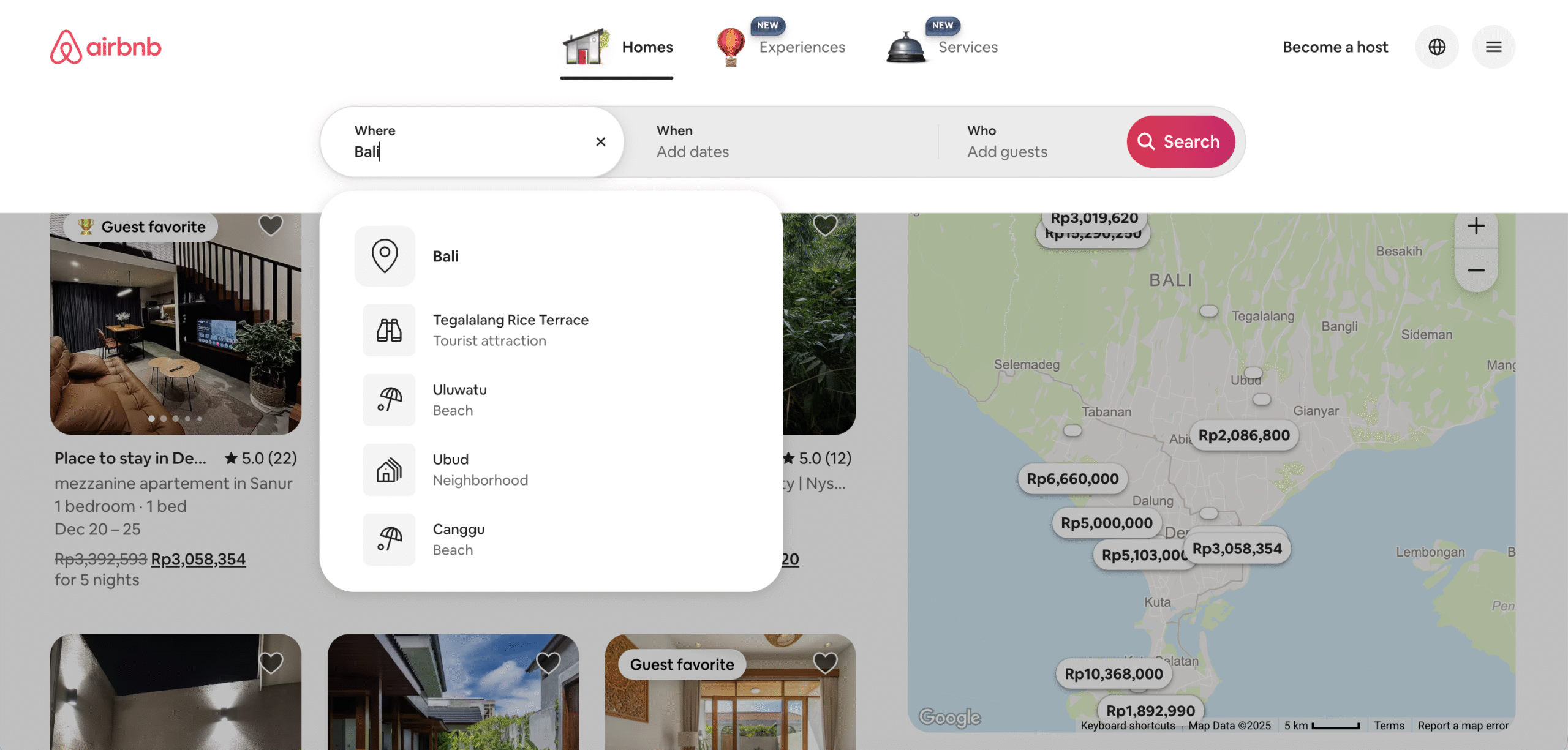
Governor Koster’s key criticism centers around digital accommodation platforms like Airbnb, which he claims are not contributing adequately to Bali’s locally generated revenue or Pendapatan Asli Daerah (PAD).
Tourist arrivals have surged past pre-pandemic levels, hitting 6.3 million foreign visitors in 2024, yet hotel occupancy rates have not risen proportionally.
“This will be reviewed, and we will propose stopping [Airbnb services],” Koster stated at the conference.
He elaborated, “Airbnb does not fully support Bali’s local economy, that’s what’s happening now… We must be united; it’s not only the government’s responsibility but all of ours.”
Bali Financial Picture

Data from the Bali Regional Treasury Office shows the province’s PAD reached IDR Rp15.3 trillion (approximately USD $960 million) by October 2025, with regional taxes contributing Rp12 trillion (USD $721 million).
This figure represents only 71% of the total target of IDR Rp21.5 trillion (approximately USD $1.29 billion).
From the Rp12 trillion in tax revenue, the largest contributor was the Tax on Specific Goods and Services (PBJT), valued at IDR Rp7.13 trillion (USD $428.5 million).
PBJT includes taxes from hotels, villas, cafés, restaurants, entertainment venues (bars, clubs, shows), and certain food and beverage sales.
What Governor Koster considers the core issue is that PBJT is growing very rapidly (14.76%), yet the hotel sector—despite being part of PBJT—has not received a proportional share, even though tourist numbers continue to rise.
Bali's PAD rose 9.58% compared to 2024, but Koster believes the overall revenue is still low and indicates a likely tax leakage problem, where income that should flow into Bali’s regional budget may instead be going to foreign property owners or unregistered operators.
Read More: Bali Yacht Investment on the Rise: A Smarter Option Than Property?
The Massive "Shadow Market" in Bali
PHRI (Indonesian Hotel and Restaurant Association) Bali Chairman, Tjok Oka Artha Ardana Sukawati, highlighted discrepancies in Bali’s accommodation data.
Currently, the organization has 378 registered accommodations. This number is far smaller compared to the estimated 16,000 units marketed online via Airbnb.
According to Oka, many Airbnb operations are believed to be run by foreign nationals who lease local residents’ homes and then re-rent them as daily accommodations through digital platforms—an activity considered illegal.
“This is very damaging because the rise in tourist visits is not aligned with regional revenue and occupancy levels,” Oka stated.
Read More: Hotel vs Villa in Bali: What Do Tourists Prefer in 2025?
The Ministry of Tourism Confirms Airbnb Is Not Blocked in Indonesia

Following public concern in the tourism sector, the Ministry of Tourism Indonesia has clarified that Airbnb is not banned in Indonesia.
The ministry confirmed that the government has never stopped, and does not plan to stop, the operations of online travel agencies.
At the same time, accommodation providers in Bali are being reminded to keep their documentation in order.
This includes valid licenses such as a Business Identification Number (NIB), a tourism accommodation license (Tanda Daftar Usaha Pariwisata / TDUP or a Pondok Wisata), correct land zoning, and proper tax payments.
Tourism Minister Widiyanti Wardhana emphasized that business permits are more than paperwork.
Licensing through the Online Single Submission (OSS) system helps ensure safety standards, professionalism, and proper tax contributions, which support both regional and national revenue.
The ministry also stressed that its approach focuses on cooperation, not restrictions, to build a strong, inclusive, and competitive tourism industry.
For travelers, this means bookings through Airbnb and other platforms remain safe and valid.
Airbnb has operated in Bali for over a decade and recently partnered with UNESCO to help promote Balinese culture to visitors.
This Crackdown Is Not New: Bali Has Been Enforcing Rules for Years

Governor Koster's threat, while striking, is not the first attempt to rein in the sector. It follows an ongoing enforcement campaign throughout 2025.
Authorities have moved beyond warnings to active penalties. These measures include sealing unlicensed villas with official notices, conducting tax audits, and even carrying out demolitions.
In a high-profile case in July 2025, Governor Koster oversaw the demolition of 48 illegal structures at Bingin Beach.
The governor also halted a controversial elevator project in Nusa Penida after it went viral and drew widespread public criticism.
Even so, a complete ban on platforms like Airbnb would trigger a major shift in Bali’s tourism economy:
- For Travelers: The range of affordable and unique accommodation options would drastically shrink. This could lead to higher prices in licensed hotels and potentially alter the demographic of tourists visiting Bali.
- For the Market: Licensed hotels and villas would likely experience a surge in demand. However, experts warn a blunt ban could push the rental market further underground, onto social media and messaging apps, making it even harder to regulate and ensure guest safety.
What Should Bali Property Investors Do Now?
The message is clear: informal short-term renting is entering its final chapter. Legal compliance is no longer optional.
If you own or plan to invest in a Bali property, take these immediate steps:
- Never skip legal structure audit. Review your business license (KBLI code) and all property permits.
- Ensure you are registered for and paying the correct regional hotel and restaurant taxes. Learn more about Bali property taxes here.
- Buy in the right land zoning. Verify that your property has the correct tourism business license (TDUP) and that its use complies with local zoning laws.
- If using a local management company, verify they hold the proper tourism licenses for short-term rentals.
- Re-evaluate your short-term rental business plans. Consider pivoting to long-term leases (3+ months) or exploring compliant hotel investments.
Read More: Can Foreigners Buy Property in Bali? Full Legal Guide for You
Planting Long-Term Rental Business for Stability and Growth

Diversifying into long-term rentals is a smart way to create a more stable and resilient investment. Here’s a strategy to help you make that adjustment.
- Understand the regulatory landscape: This means having the correct business licenses (PT/PMA for foreign owners), proper building permits, and paying all due taxes. Operating legally is your best defense against any future policy changes.
- Identify your target tenant and location: The long-term rental market in Bali is driven by specific demographics. For example, digital nomads and remote workers now make up about 20% of this market. They typically seek stays of one to three months or longer.
- Property setup: Furnish for living, not just vacation. A reliable, fast Wi-Fi connection and a comfortable work desk are non-negotiable for the core digital nomad market.
- Pricing strategy: Long-term rents are typically 20-40% lower monthly than the pro-rated short-term rate. However, this is offset by significantly lower costs (e.g., no daily cleaning, less platform fees, fewer utility turnovers). Learn more about villa rental pricing strategies here.
- Choose the right management model: You can choose self-management using local Facebook groups and agents, or hire a professional property manager. A good manager handles tenant sourcing, contracts and daily maintenance.
We get it. Shifting to long-term rentals can feel overwhelming.
But you don’t have to handle everything on your own. With Bali Villa Realty, investing in Bali stays simple and stress-free.
As a legally registered real estate agency, we’ve helped many foreign investors buy property safely and efficiently.
Our in-house legal team checks every listing, ensuring full due diligence and proper rental licensing.
You'll get support at every step, from choosing the right villa or land, to legal checks, and even marketing and property management. Whether you’re in Bali or overseas, you can invest with confidence.
Get your personalized investment strategy from our senior agents today.

Conclusion
With the Ministry of Tourism confirming that Airbnb is not banned in Bali or anywhere else in Indonesia, both investors and renters can continue using the platform as usual.
That said, investors are strongly encouraged to register their properties properly and operate legally to avoid serious issues in the future.
If not, there is a real risk that rental operations could be shut down by authorities—just as has happened in past cases.
FAQ
1. What is Airbnb?
2. Is Airbnb safe?
3. How is Airbnb different from a hotel?
Hotels, on the other hand, provide a more consistent experience with professional services and guaranteed security — though they’re usually more formal and less flexible.