Disclaimers: This article is for informational purposes only; prices and figures may change due to market conditions. We recommend speaking with a senior advisor before making any final decisions.
Key Takeaways
- Jakarta suits investors who want stable long-term tenants and predictable income at around 4% rental yield, while Bali offers higher returns of 7–18% driven by strong tourism demand.
- Bali apartments start at IDR 33 million per unit with price growth of 8–10% per year, making it a stronger capital appreciation play compared to Jakarta's modest 1–2% annual growth.
- Foreign investors in both cities cannot own freehold property and must use legal structures such as Leasehold, Hak Pakai, or PT PMA to purchase real estate in Indonesia.
- The right choice depends on your goals: choose Jakarta for stability and urban infrastructure, or choose Bali for higher yields and a more affordable lifestyle.
When people talk about property investment in Indonesia, many expats immediately think of Bali. But Indonesia also offers other strong options, and Jakarta is one of them.
Many expats are now also investing in Jakarta apartments, such as in Pakubuwono Menteng. This area is known for luxury apartments, green surroundings, and lower entry prices compared to many Bali properties.
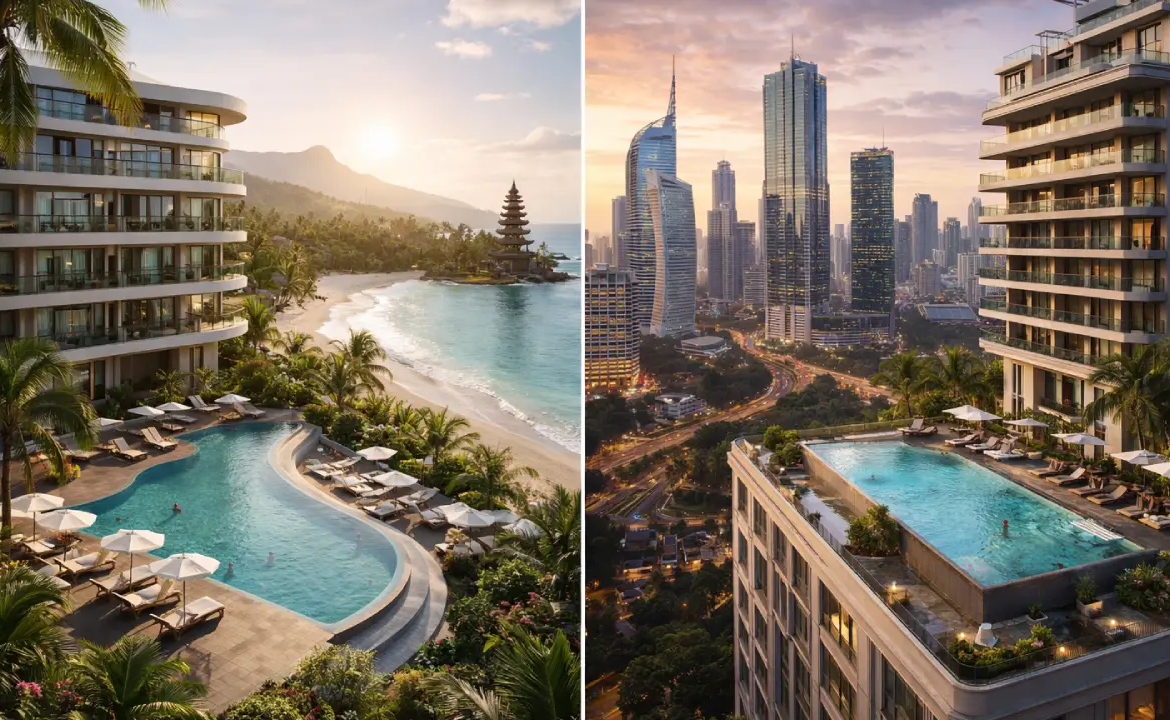
Both Bali and Jakarta can work as investment choices, but they behave very differently. They differ in rental stability, return potential, risk level, and exit strategy.
Let’s look at each option closer and see which one fits your goals best.

Quick Comparison: Bali vs Jakarta Property Investment
The table below summarizes the key investment indicators side by side so you can evaluate both markets at a glance.
| Feature | Bali | Jakarta |
|---|---|---|
| Average apartment price | USD $1,950 - $7,380 (IDR 33 million - IDR 125 million) | USD $6,018 - $147.5 million (IDR 102 million - IDR 2.5T) |
| Annual price growth | 8–10% per year | 1-2% per year |
| Rental yield (ROI) | 7–12% (villas up to 18%) | 4% |
| Average daily rental income | USD $90 – $150/day (IDR 1.5 million – 2.5 million) | USD $37 – $48/day (IDR 625K – 810K) |
| Average annual rental income | USD ≈ $32,850 – $54,750/year (IDR 555 million – 925 million) | USD ≈ $13,505 –$17,520/year (IDR 228 million – 296 million) |
| Market stability | Seasonal, tourism-dependent | Stable, year-round demand |
| Annual tourist growth | 10% | 8% |
| Buyer tax (BPHTB) | Up to 5% | Up to 5% |
| Annual property tax | 0.1–0.5% | 0.01–0.2% |
| Foreign ownership | Leasehold / Hak Pakai / PT PMA | Leasehold / PT PMA |
Jakarta Apartment Market: Demand, Growth, and Investment Outlook
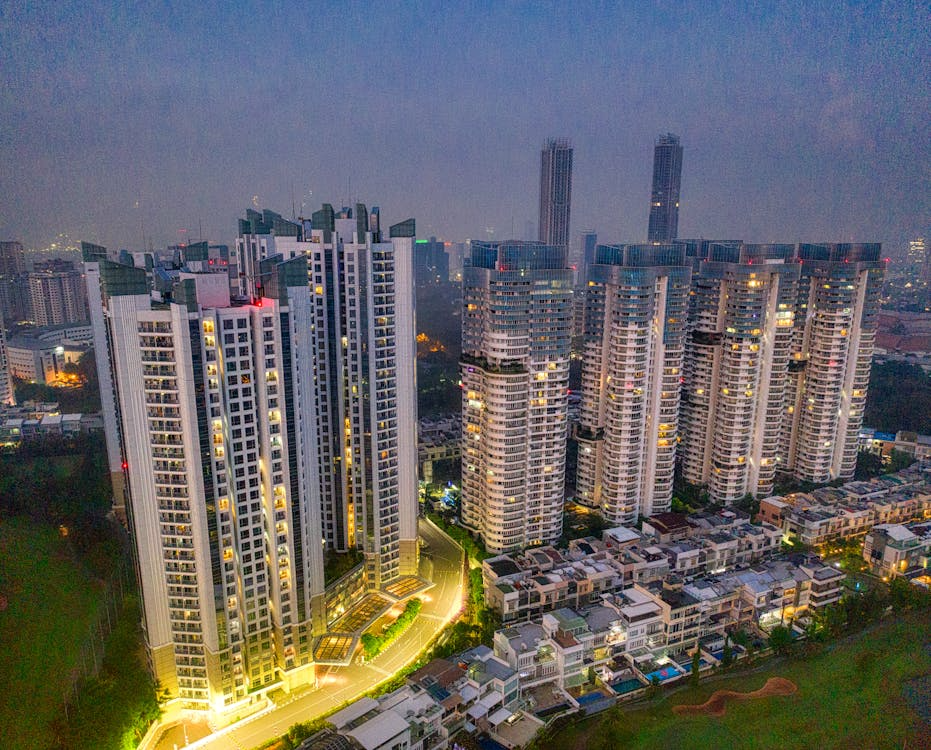
Jakarta is Indonesia’s main business hub, and most apartment tenants here are long-term renters—typically professionals, families, or companies leasing for staff. This means investors can enjoy stable occupancy while minimizing marketing and turnover costs.
According to a Colliers report, Jakarta apartment rental yields have stayed around 4% between 2022 and 2024, with the Central Business District (CBD) consistently recording the highest and most stable yields at 4.3%. This is largely due to corporate tenants, expatriates, and professionals seeking premium amenities in prime locations.
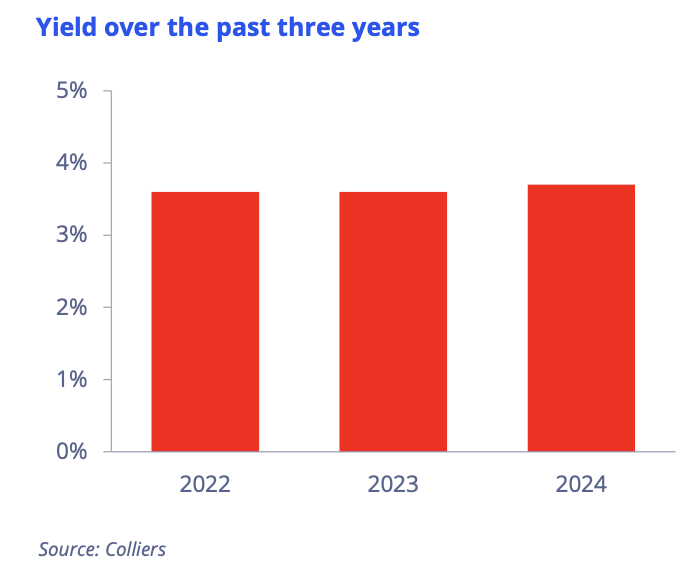
Unlike Bali, Jakarta is not a high-growth property market, especially for apartments. Colliers notes that apartment yields here are still lower than 10-year government bonds (~7%) and bank deposits (~5%). Apartment price growth is also modest, averaging only 1–2% per year.
As of Q1 2025, no new apartment projects were launched, with sales data showing only 162 units sold. As a result, developers are focusing on selling existing stock, and total apartment supply in Jakarta is projected to reach approximately 235,616 units by 2027.
Bali Apartment Market: Demand, Growth, and Investment Outlook

When it comes to property investment in Bali, villas are usually the first thing that comes to mind (for good reason). Bali villas have historically shown strong returns, with yields reaching up to 18%, thanks to the island’s robust year-round tourism market.
That said, Bali apartments also offer unique advantages as an investment asset. According to the latest Colliers' annual property market report on Bali apartments (2025), the market is expected to remain stable, though increasingly selective due to limited land and regulatory constraints. For a detailed step-by-step guide, see how to invest in Bali apartment.
Most developers are now focusing on redeveloping existing buildings rather than constructing entirely new units. As of 2025, Bali had around 3,000 apartment units across various areas, with Seminyak and Uluwatu commanding the highest prices.
In terms of ROI, Bali apartments are estimated to generate 8–15%, with an average net yield of around 11.25% per year.
Ready to own an apartment? Browse exclusive apartments for investment in Bali
Ownership Rules for Foreign Buyers
If you are a foreign investor, ownership rules matter, both in Jakarta and Bali. Foreigners cannot own freehold (Hak Milik) property in Indonesia. Instead, common options are:
- Leasehold: You buy the right to use the property for a fixed period of time, usually 25–30 years, with extension options.
- Right to Use (Hak Pakai): A legal ownership option for foreigners that allows long-term use of residential property under Indonesian law.
- PT PMA structure: You buy the property through a foreign-owned company in Indonesia, commonly used for investment or business purposes.
Each option has different legal and tax impacts. Learn further here: What Are the Annual Real Estate Taxes in Bali? Full Breakdown
Key Lifestyle and Infrastructure Factors in Bali vs Jakarta
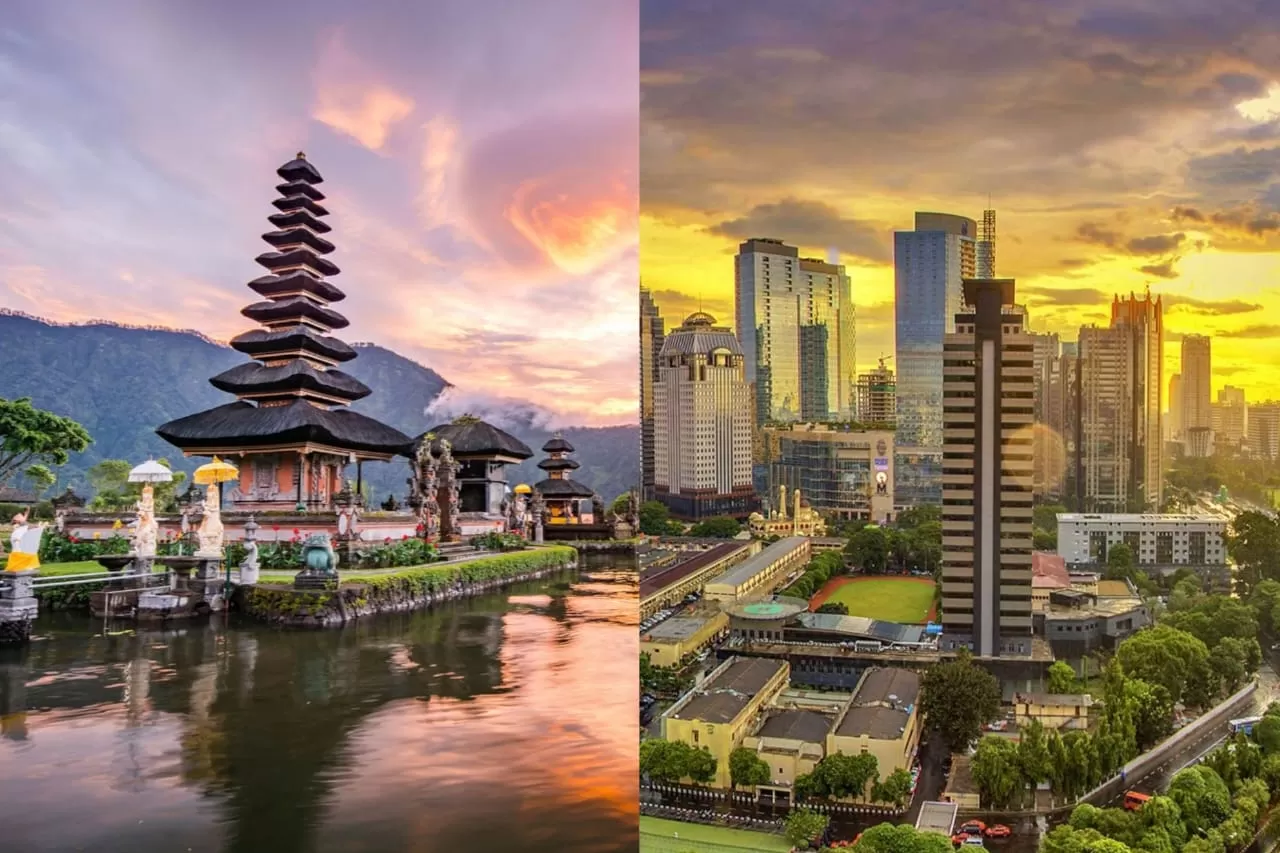
When considering property investment, or even relocation, you need to understand the key differences in lifestyle and infrastructure between each location.
Cost of Living
For investors thinking about relocation, the cost of living is a major factor.
- Jakarta: Monthly living costs are estimated at $1,635–$2,180 (IDR 26.3M–35M), reflecting the higher cost of urban living but offering access to world-class infrastructure, services, and amenities.
- Bali: Monthly expenses are typically $1,090–$1,635 (IDR 17.5M–26.3M) and can be lower outside tourist areas, making Bali attractive for lifestyle-focused investors due to the generally lower cost of goods and services.
Read More: Cost of Living in Bali (2026): Realistic Breakdown for Expats
Transportation and Infrastructure
Infrastructure quality impacts both rental demand and property values.
- Jakarta: The city has a developed public transport system, including buses and the MRT metro, which has improved connectivity and boosted property demand near transit lines despite traffic congestion.
- Bali: Transportation infrastructure is less developed, with congested roads in tourist areas. Most residents rely on scooters ($55–$109/month / IDR 875K–1.75M), though ongoing road upgrades and new interchanges are gradually improving investment appeal.
Education and Healthcare
For expats with families, access to quality schools and medical facilities is a key consideration.
- Bali: Offers international schools such as Green School and Bali Island School, with tuition around $10,900–$16,350/year (IDR 175M–262M), known for environmental focus and global curriculum.
- Jakarta: Features a broader range of international schools like Jakarta Intercultural School and British School Jakarta, with tuition from $16,350–$27,250/year (IDR 262M–437M), preparing students for top global universities.
Healthcare
- Bali: Facilities like BIMC Hospital provide quality care, though complex cases are often referred to Jakarta or overseas.
- Jakarta: Offers advanced medical infrastructure, including Siloam Hospitals and Rumah Sakit Pondok Indah, with high accessibility for expats and locals.
Economic Stability and Market Resilience
Economic stability is a critical but often overlooked factor in property investment.
- Bali: The economy is heavily tourism-dependent, making it vulnerable to external shocks such as pandemics or natural disasters, and rental income can be highly seasonal.
- Jakarta: A more diversified economy offers greater resilience, driven by a growing middle class, strong domestic demand, and ongoing infrastructure investment, creating a more stable environment for long-term property investments
Compare Bali with other investment destinations:
- Dubai Real Estate “Crashed”: Is Bali a Safer Choice Amid Geopolitical Uncertainty?
- Bali vs. Thailand: Which Offers the Best Property Investment?
- Bali vs. Hawaii: Which Is Better for Holidays and Investment?
Jakarta or Bali: Which is Better for You?
There is no one-size-fits-all answer. Every investor has different goals, and the best choice depends on yours.
Choose Jakarta if you want:
- Stable, long-term tenants and predictable income with less seasonality
- Lower management overhead with professional or corporate tenants
- Exposure to a diversified economy less reliant on a single industry
- Access to better healthcare, schools, and urban infrastructure for your family
Choose Bali if you want:
- Higher return potential from tourism-driven rental demand
- Flexibility between short-term holiday rentals and long-term tenants
- Stronger capital appreciation potential of 8–10% per year
- A lower cost of living if you plan to relocate or spend extended time on the island
Conclusion
Jakarta and Bali investments have very different characteristics. Jakarta returns come from steady occupancy and long-term renters, but the yield is typically around 4%. Bali, on the other hand, can offer dramatically higher returns—up to 18%—thanks to its strong tourism market, though income can be seasonal and requires careful planning.
The right choice depends entirely on your investment goals and risk tolerance. Still unsure which option suits you best? Ask our senior property advisors for free guidance—we’ll help you start from zero.
Bali Villa Realty has helped many expats find their ideal real estate. Contact us today, share your plans, and let’s make your property dreams a reality.
FAQ
Generally, Bali can be more affordable, especially for housing and daily expenses, depending on your lifestyle choices. Renting a house or villa in Bali is often cheaper than renting an apartment in central Jakarta.
As Indonesia’s capital and largest metropolitan city, Jakarta faces major urban challenges, including traffic congestion, air pollution, flooding, and land subsidence.
Yes. The Bali property market is stable and profitable. Currently, Bali offers some of the highest rental yields in the world, around 15% of the purchase price.
If you plan to stay short-term or want flexibility, renting is better. If you plan to stay long-term and want an investment, buying is usually best.