Disclaimer: This article is for informational purposes only; prices and figures may change due to market conditions. We recommend speaking with a senior advisor before making any final decisions.
Key Takeaways
- Foreigners can legally rent out villas on Airbnb through PT PMA, securing the correct zoning (Tourism/Commercial), and obtaining a Pondok Wisata License.
- Budgeting is essential, with major costs including villa purchase, furnishing and renovation, licenses/legal fees, management (20–30% of income), and taxes.
- Some strategies to stand out in a competitive rental market are offering unique guest experiences, collecting strong reviews, using dynamic pricing feature, and ensuring your property is "Instagram-worthy".
- Bali’s Airbnb market is booming, with over 70,000 listings by 2024 and solid profitability—especially in top areas like Canggu, Seminyak, and Ubud where average annual short-term rental earnings reach $20K, with occupancy rates at 65%.
Starting an Airbnb business in Bali is both exciting and overwhelming, especially for foreign investors. From legal requirements and budgeting to choosing the right location and managing the property, there’s a lot to consider.
The good news is that with the right structure and reliable local guidance, running a successful villa rental in Bali is not only possible—it can be one of the most rewarding ways to combine lifestyle and investment.
In this guide, you’ll learn how to set up your Airbnb business legally, understand Bali’s Airbnb rental market, plan your budget, and position your villa for long-term success.
How Foreign Owners Can Legally Rent Out Their Bali Property on Airbnb
Renting out your property on Airbnb in Bali as a foreign owner can be a lucrative opportunity.
However, it also comes with specific legal requirements that must be followed to stay compliant with Indonesian law. Here's what you need to know.
1. Property Ownership Rules in Bali
First, it's important to understand that foreigners cannot directly own freehold property in Indonesia. To legally operate a rental business in Bali, you have to set up a PT PMA (foreign-owned company).
A PT PMA allows a foreigner to hold property under the company’s name. While it is not technically freehold, it offers a freehold-like level of control and security.
Villas purchased under a PT PMA are legally owned by the company and can be used for business purposes, including rentals.
There are a few key requirements to be aware of:
- Your villa must be registered as a business entity
- You must obtain the appropriate operational permits from the local authorities
- The property must meet environmental, zoning, and building standards, which are assessed before any license is issued
2. Zoning Regulations
Bali’s land is divided into several zoning categories. If you plan to rent out your property on Airbnb, it must be located in a Tourism zone or in a zone that allows commercial accommodation activities.
These zones are often close to popular attractions, making them more attractive for short-term rentals. Properties located in the correct zoning are legally permitted to operate and typically benefit from stronger and more consistent guest demand.
3. Obtaining a Rental License
To legally rent out your property on Airbnb, you must obtain an accommodation license known as Pondok Wisata.
This license is commonly used for short-term rentals such as villas and guesthouses and allows the property to operate legally as a tourist accommodation.
However, only Indonesian citizens can directly hold a Pondok Wisata license. That’s why many foreign owners legally partner with a trusted local Indonesian nominee. That said, it is also possible to obtain a Pondok Wisata license through a PT PMA.
If your Bali property already has a valid Pondok Wisata license, it can be legally listed on platforms such as Airbnb.
4. Taxation Overview
Foreign owners who rent out property in Bali are subject to several types of taxes, depending on the ownership structure:
| Tax Type | Rate | Applies To | Notes |
|---|---|---|---|
| Rental Income Tax | 10% | Individual owners | Applied to gross rental income |
| Corporate Income Tax | Up to 25% | PT PMA (foreign-owned company) | Applies to rental income |
| Dividend Withholding Tax | 20% | PT PMA shareholders | Withheld on dividends paid to foreign shareholders |
| Value Added Tax (VAT) | 10% | Eligible rental businesses | Applies once rental income exceeds the required threshold |
It's crucial to consult with a local tax advisor or accountant to ensure you’re meeting all legal tax obligations accurately.
How to Start an Airbnb Business in Bali
1. Choose the Right Property
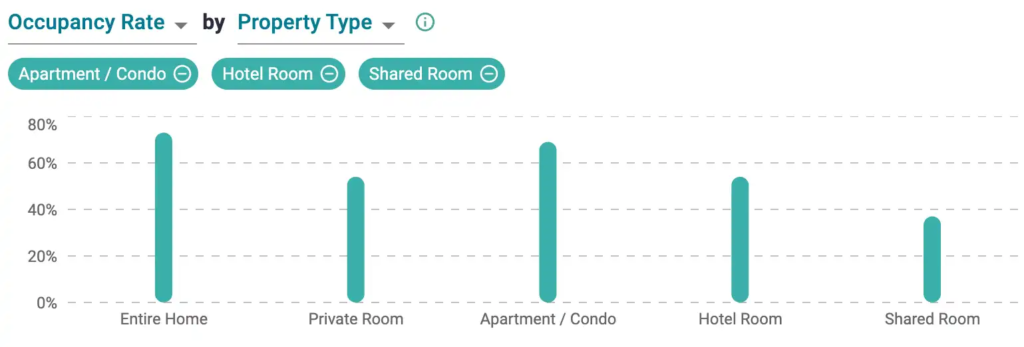
What property types perform best on Airbnb in Bali? Villas remain the most common and most popular Airbnb property type in Bali.
Data also shows that entire homes property—like villas—tend to achieve higher occupancy rates compared to hotels or shared-room listings (apartments).
You can explore a range of Bali villas for sale as potential rental assets in our exclusive 2026 listings here. We offer villas from 1 to 6+ bedroom, ready to purchase and operate as Airbnb rentals!
Next, choose the right location to invest in.
We analyzed Google Trends data from 2021 to 2026 to compare Airbnb rental interest in Ubud, Canggu, Seminyak, and Uluwatu. The data shows Ubud (blue) as the most popular destination, with Canggu close behind.
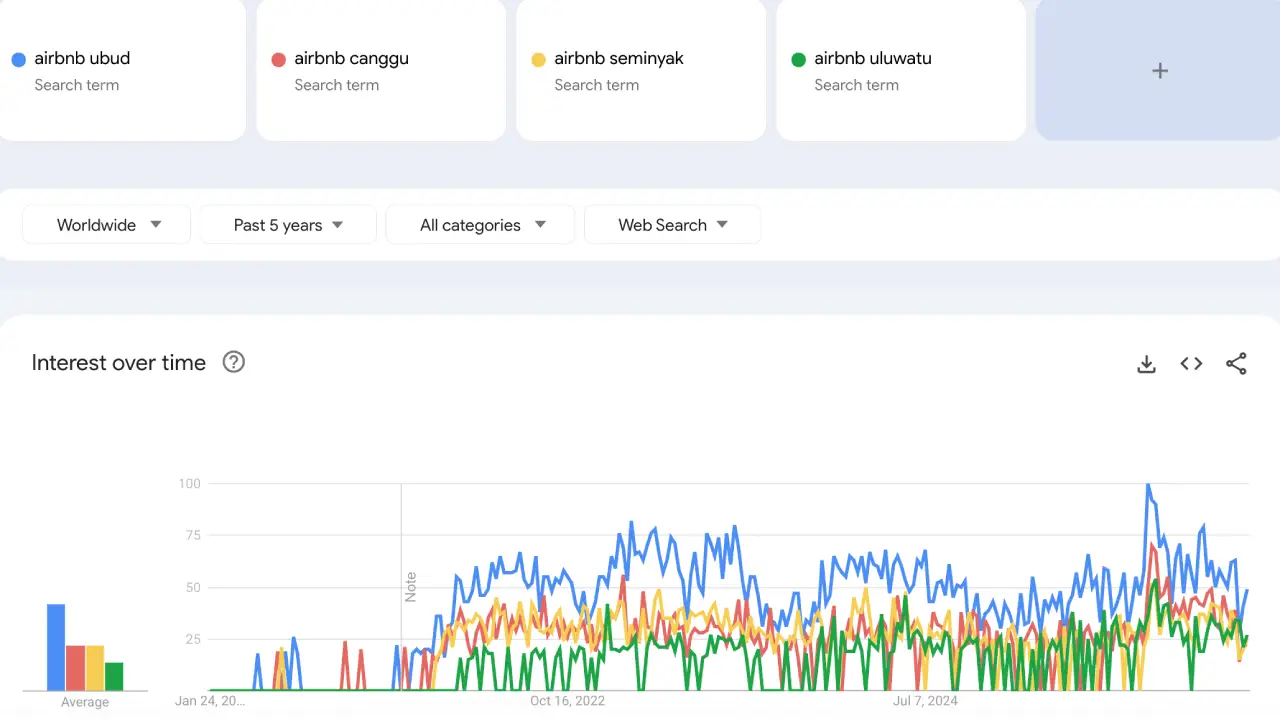
In the post-pandemic period, Canggu (red) and Seminyak (yellow) have demonstrated consistently strong demand, confirming their positions as some of Bali’s most popular areas for Airbnb rentals today.
For investors, these trends point to strong rental demand, with the potential for healthy occupancy rates and attractive yields in these prime locations.
2. Obtain the Necessary Licenses
To operate an Airbnb business legally in Bali, you must register your property as a business with the local authorities. This includes securing the required permits (such as a Pondok Wisata license) and obtaining a tax identification number (NPWP).
Some people still think that obtaining an NPWP is just a formality. In fact, it isn’t.
This number is required to register and operate a business in Indonesia, and it is also necessary for filing and paying taxes on rental income. Having an NPWP ensures that your rental business operates legally and smoothly.
3. Hire a Property Management Company
Managing a rental property can be a complex task. That's why many foreign owners choose to work with a local property management company.
A professional management team typically handles:
- Licensing and operational setup
- Booking and pricing management
- Guest communication and services
- Ongoing compliance with local regulations
This is especially helpful if you are not based in Bali full-time.
4. Ensure Compliance and Quality
Beyond legal compliance, maintaining high property standards is critical. Regular inspections, proper waste management, and consistent maintenance—such as pool and garden care—are essential.
A positive guest experience leads to better reviews, which directly impacts occupancy rates and long-term return on investment (ROI).
How Much Does It Cost to Open an Airbnb in Bali?
Budgeting is crucial when planning to start an Airbnb rental business in Bali. You want to ensure you’re fully prepared for all the costs of running a successful and profitable business.
Here's a simple breakdown to help you understand the key expenses:
| Category | Estimated Cost | Notes |
|---|---|---|
| 1. Property Purchase | $200,000 – $1,250,000 USD | Based on location (e.g., Seminyak, Canggu); prices reflect demand in prime areas. Take a look at current property prices here. |
| 2. Renovation & Furnishing | - Renovation: $10,000 – $50,000 USD - Furnishing: $10,000 – $20,000+ USD | Luxury villas may exceed this range; includes furniture, appliances, and decor |
| 3. Licensing & Legal Fees | $1,500 – $3,000 USD | Includes legal fees for obtaining the Pondok Wisata License |
| 4. Management & Maintenance | - Management: 20–30% of rental income - Maintenance: $2,000 – $5,000 USD/year | Covers property management, pool, garden, and general upkeep |
| 5. Listings | ~3% of booking subtotal | Airbnb service fee; standard across all markets |
| 6. Taxes & Insurance | 10% of gross rental income | Applied to rental income in Indonesia |
| 7. Unexpected Expenses | ~10% of total budget | Recommended buffer for emergency repairs or market changes |
Read More: How to Set Up Villa Price on Airbnb for More Guests
How to Charge Premium Rates Without Losing Guests (Airbnb Pricing Strategy)
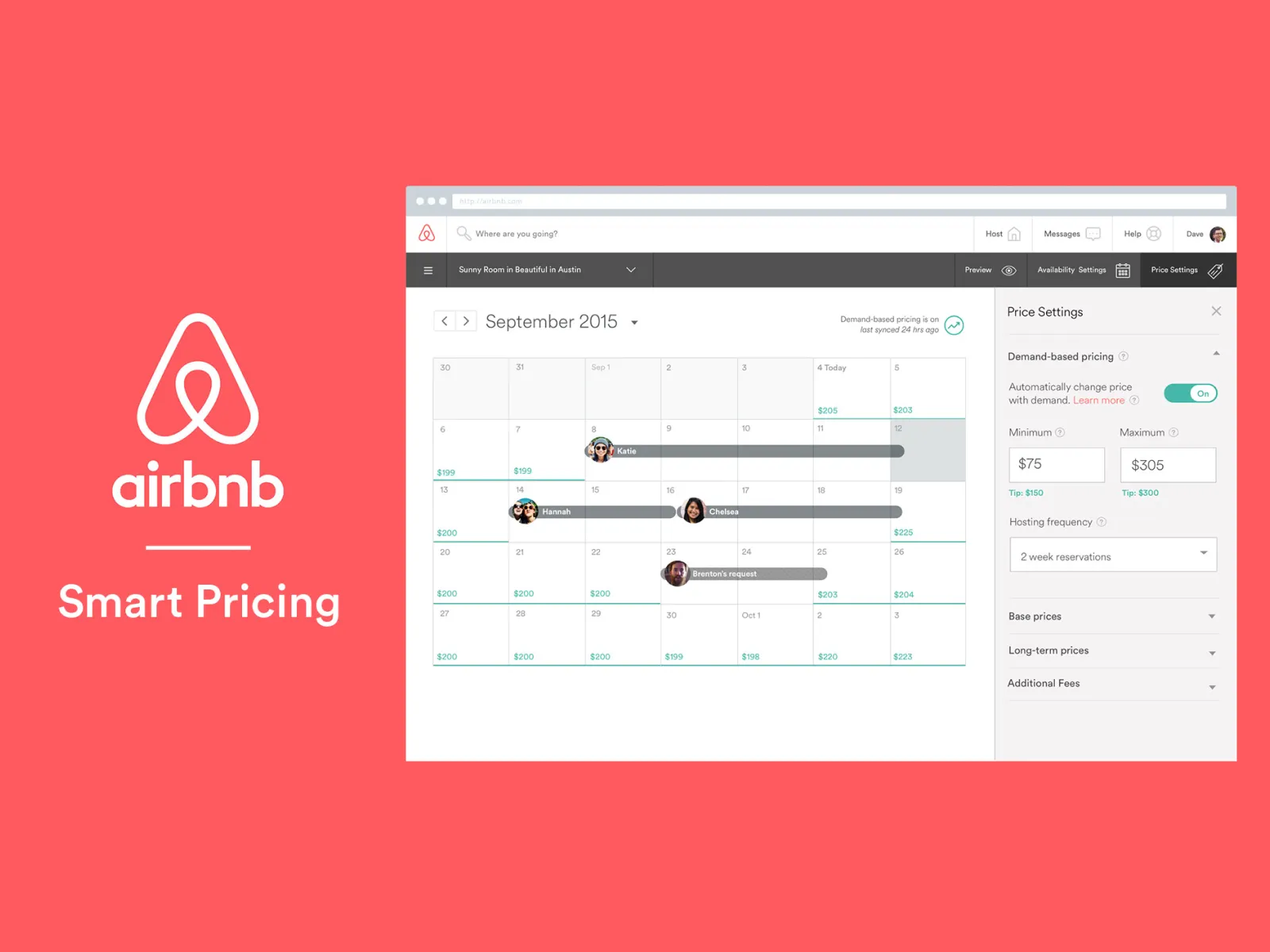
Many foreign investors want to create a lucrative Airbnb business, but how do you charge premium rates without losing guests to lower-priced competitors? Let’s explore some useful tips.
1. Position Your Property as a Unique Experience
When guests look for premium properties, they’re not just looking for a place to stay—they’re looking for an experience. So, instead of competing on price alone, focus on what sets your property apart.
Think about questions like:
- What makes my villa stand out from the rest?
- Is it the stunning views, the eco-friendly design, or the private chef experience?
Consider adding personalized touches that make your property memorable.
Imagine a guest who sees two villas in the exact location—one offers a simple stay, while yours offers a dedicated yoga space with a private instructor available on request.
That additional experience can make all the difference when guests are willing to pay more for a richer, more tailored stay.
2. Leverage Reviews and Social Proof
Guests often look for social proof when booking a high-priced villa—basically, reassurance that the property is worth the price.
Positive reviews, stunning photos, and testimonials can help convince potential guests to pay more.
But what if you don’t have reviews or have never rented out your property?
Don’t worry! There are still ways to build credibility and attract guests willing to pay premium prices. Here’s what you can do:
- Leverage Introductory Offers. Consider offering an introductory discount or package for your first few guests. For example, you could offer free airport pickups or a welcome dinner. Guests love value-added experiences, and this can quickly lead to positive feedback.
- Ask for Guest Testimonials from Early Stays. Once you’ve had a few guests, encourage them to leave detailed reviews highlighting what they loved most about your property. Make sure you add personalized touches to ensure they have a great experience worth sharing in their reviews.
- Focus on Trust Signals. Provide detailed information about the property, and list your credentials or partnerships with local property management companies. Show potential renters that you’ve ensured their stay will be seamless.
Positive reviews are a safety net for future guests and justify the premium price.
3. Flexible Pricing Strategies
Charging premium rates doesn’t mean you have to stick to a rigid price structure.
Consider using flexible pricing strategies to attract high-end guests during peak seasons and budget-conscious travelers during off-peak times.
Dynamic pricing tools, like Airbnb’s Smart Pricing or third-party platforms, adjust your property’s rates based on demand, seasonality, and competitor pricing.
This ensures you maximize your revenue during high-demand periods while keeping your villa occupied during slower times.
4. Make Your Airbnb Listing Instagram-Worthy
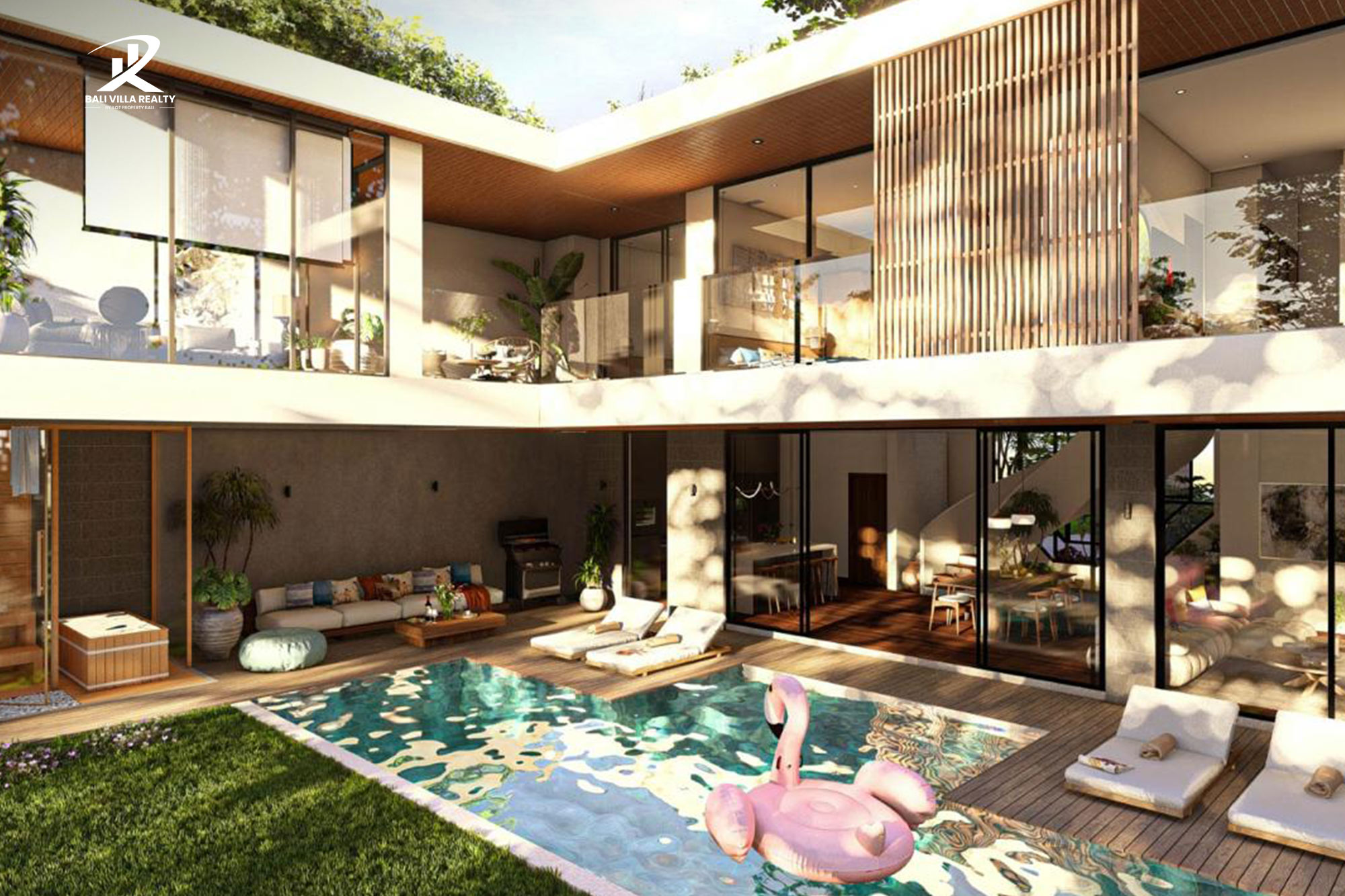
In today’s world, Airbnb properties that look great in photos naturally draw more attention. This is where an “Instagram-worthy” design comes into play.
Choose two or three key design elements that stand out—like a rooftop lounge, a Balinese-inspired garden, or a unique infinity pool.
The more your villa inspires guests to take photos and share their experiences, the more likely you will attract new guests willing to pay premium prices for the bragging rights.
Understanding Bali’s Airbnb Market
Airbnb's growth in Bali has been massive. By 2024, there were over 70,000 Airbnb listings in Bali.
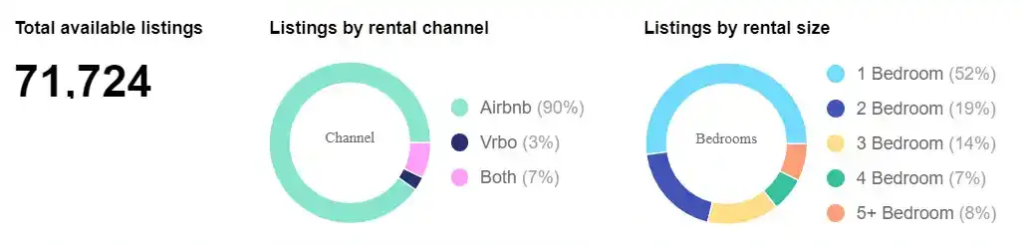
With strong visitor numbers and limited hotel supply in some areas, private villas continue to outperform traditional accommodations.
Furthermore, according to Airbtics, the average annual short-term rental revenue in Bali was IDR 326M (USD ~20K) from November 2024 to October 2025.
However, competition is also intensifying. Areas like Canggu, Pererenan, and Uluwatu are seeing rapid growth in listings, which means new hosts need stronger differentiation through design, service, and storytelling.
💡 Pro Tip: Guests now seek more than luxury. They want experiences. Think wellness themes, eco-friendly living, or culturally immersive stays for better ROI. Check out our article about 2026 travel trends to learn more.
How Profitable is the Airbnb Business in Bali?
Bali’s Airbnb income remained stable, averaging IDR 23M–41M per month or IDR 276M–492M annually (USD ~$16.8K–28.8K) in 2024-2025.
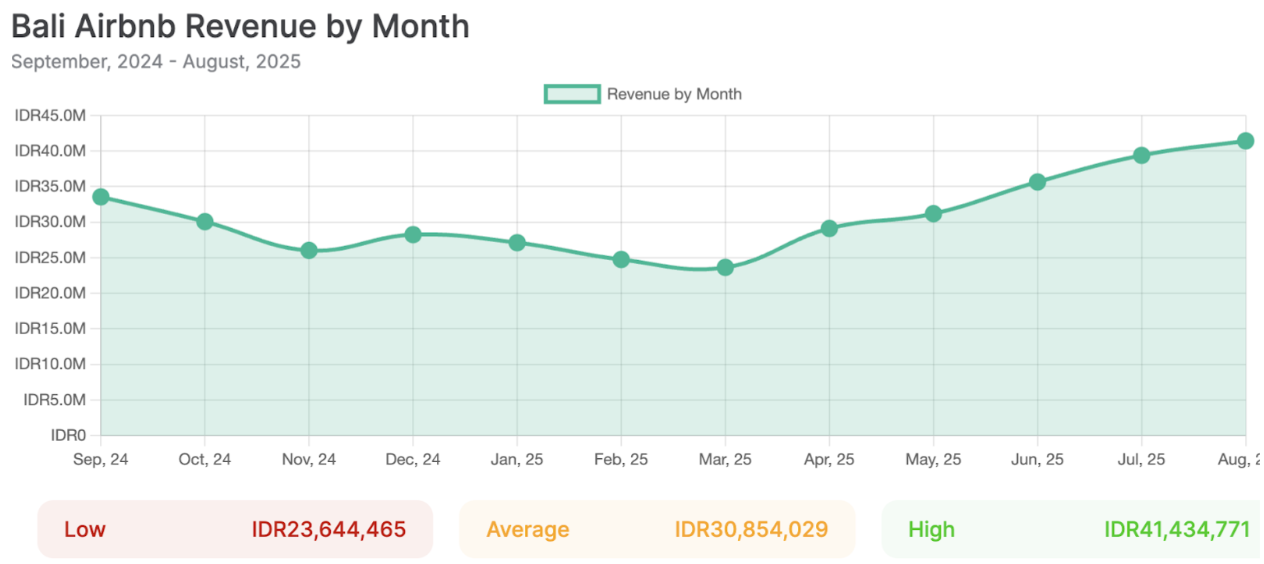
Guest arrivals typically begin to increase from March to April, before peaking around August. This pattern is normal in Bali, as the island experiences predictable tourism seasonality.
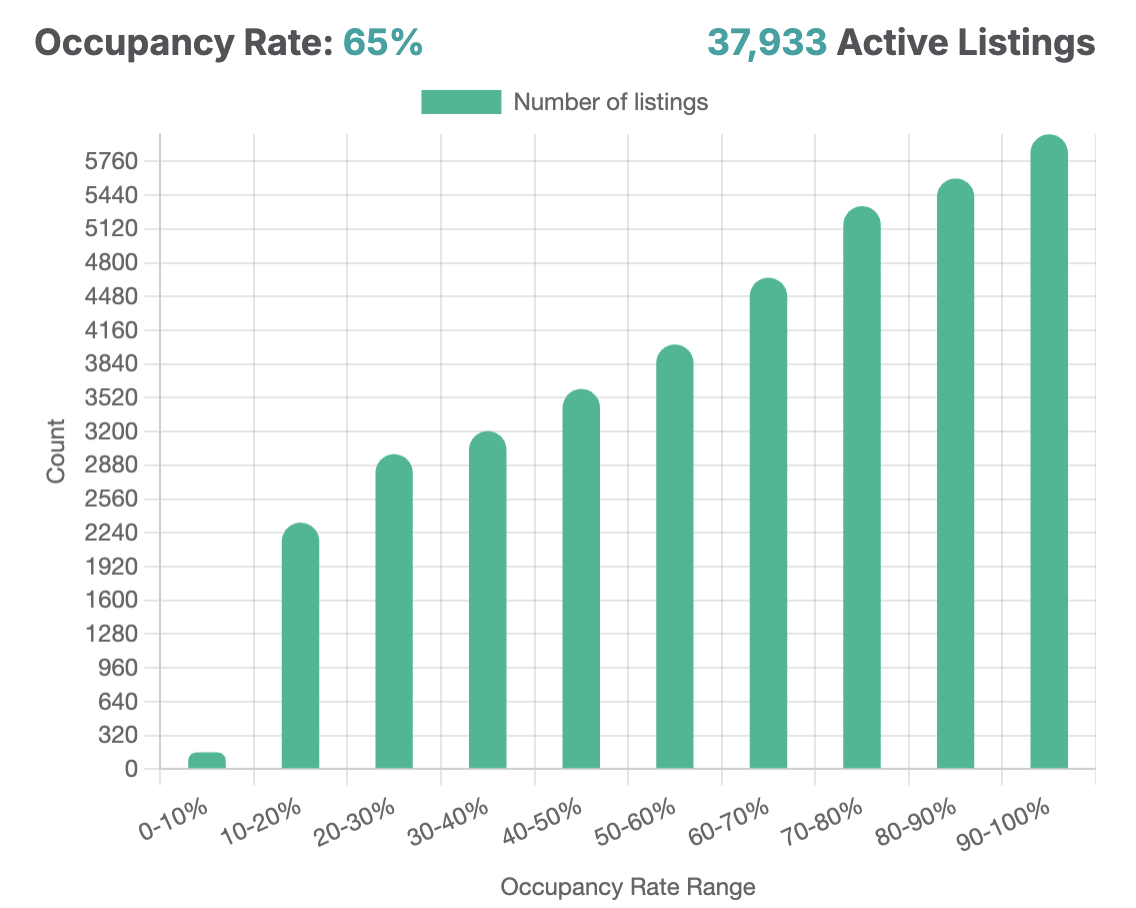
Despite these seasonal shifts, Airbnb properties in Bali maintained an average occupancy rate of about 65% in 2025, with an average daily rate of around IDR 1.5M (USD ~$94), based on Airbtics data.
That said, successful Airbnb villa investment in Bali consistently depends on a few core factors:
- Strategic location: Accessibility, neighborhood appeal, and overall vibe often matter more than villa size.
- Professional management: Fast communication, proper maintenance, and strong guest experience directly impact reviews and repeat bookings.
- Optimized pricing: Dynamic pricing strategies can increase overall yield by up to 20%.
- Villa design: High-quality design supports higher nightly rates. Villas with ocean views or close to popular beach clubs typically command premium pricing and book out faster.
Read More: How to Maximize Your Bali Villa Bookings on Airbnb
Conclusion
You've probably noticed how Airbnb business in Bali is booming. With strong demand and solid returns, starting your own Airbnb business in Bali could be a highly profitable move.
We hope this guide has helped you understand the key steps and feel more prepared to begin your Bali Airbnb journey.
That said, we also know that finding the right villa—especially one that’s fully licensed—can be a bit tricky.
That’s where Bali Villa Realty comes in. We make the process simple and ensure your villa has all the necessary documents, so you can start earning rental income with confidence.
Looking for a villa to get started? Reach out to us for free expert advice and let’s find the right property that fits your goals.
FAQ
Bali’s peak season runs from June to September and again during December holidays. During the quieter months (January–March), offering discounts or long-stay deals helps keep bookings steady.
Yes! Many owners stay in their villa for a few months a year and rent it out the rest of the time. Just be sure your Pondok Wisata license allows flexible rentals.
With the right local help, it usually takes 4–8 weeks to handle licensing, registration, and setup. Bali Villa Realty can guide you through each step, so you avoid delays or compliance issues.
Yes, the Airbnb ban plan has been cancelled. Instead, the government will focus on cracking down on illegal accommodations.