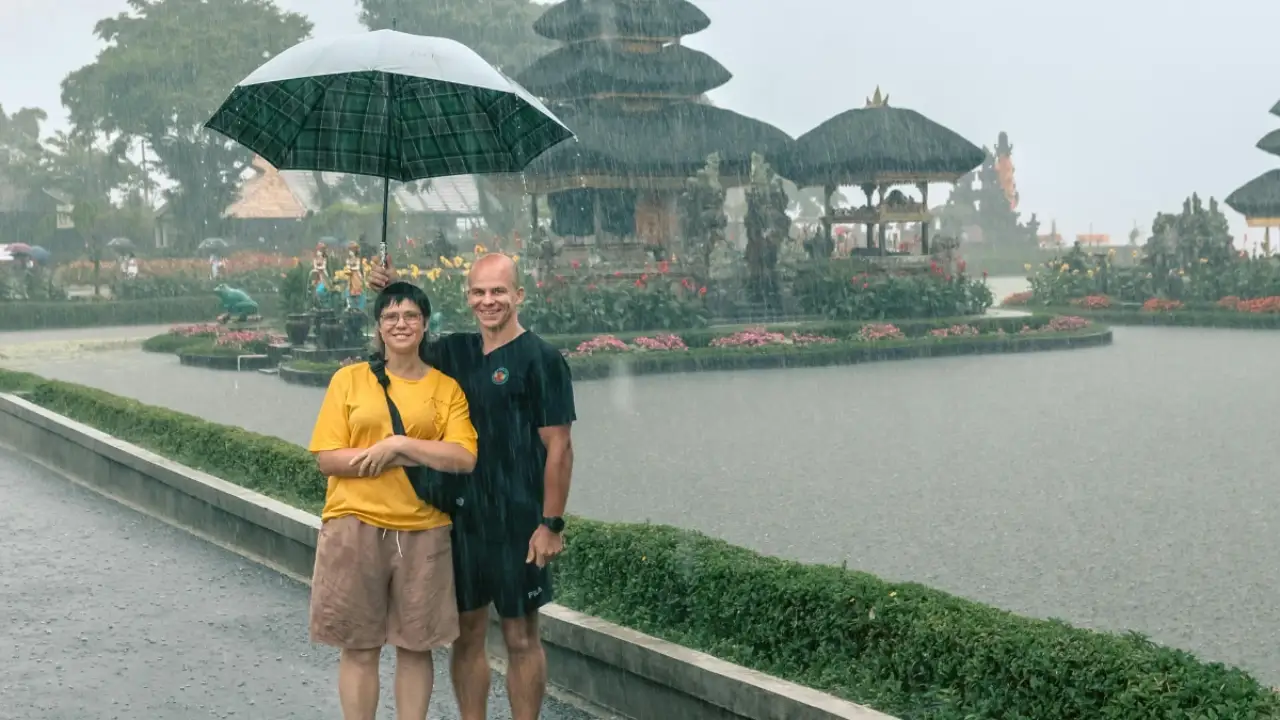
Key Takeaways
- Bali remains mostly dry and sunny in October 2026, with the rainy season expected to arrive later than usual and the extended dry season potentially lasting until December.
- Weather typically varies by area: Ubud and the central highlands are cooler and wetter, while Uluwatu and the Bukit Peninsula tend to be drier.
- Many indoor and outdoor activities are still possible to try during the wet season, such as surfing, ATV rides, spas, wellness classes, coffee tastings, shopping, and workshops.
What is Bali’s weather like right now? In early October 2026, Bali remains in its long dry season. Indonesia's meteorological agency (BMKG) says the 2026/2027 rainy season will start later than usual. In some areas, rain may not arrive until November, and in most places, not until December. This delay is because of a strong El Niño event.
So, even in October, travelers can expect mostly dry and sunny days in popular places like Denpasar, Canggu, Ubud, and Nusa Dua. A few brief showers may occur, but they should be rare.
Although sudden rain is always possible on a tropical island, the forecast shows the dry season will likely last through late 2026. This means visitors can count on more reliable weather for outdoor activities than usual.
Still, it's helpful to understand how Bali's rainy season works. This way, you can plan your trip with confidence, no matter when you decide to visit. Here’s what you need to know.
How Bad is Bali Rainy Season?
On a typical monsoon day, mornings are bright and sunny—great for running errands or viewing properties. By mid-afternoon, clouds gather, and there’s usually a heavy tropical downpour lasting from 30 minutes to two hours before clearing.
Many people avoid Bali during the wet season, but it’s actually more manageable than social media might suggest. Sometimes there are floods or fallen trees during heavy rain, but these events are not the norm.
However, you should expect real changes in Bali’s weather during the peak of the rainy season in late December, January, and February 2026. During these months, humidity is highest, and some low-lying streets in South Bali may experience flooding.
Ocean currents also change during this period, so popular southwestern beaches can sometimes collect marine debris and trash that washes ashore.
When is Wet Season in Bali?
Bali’s rainy season normally runs from November to March. The heaviest rain usually falls in December and January. Here's the Bali weather monthly overview:
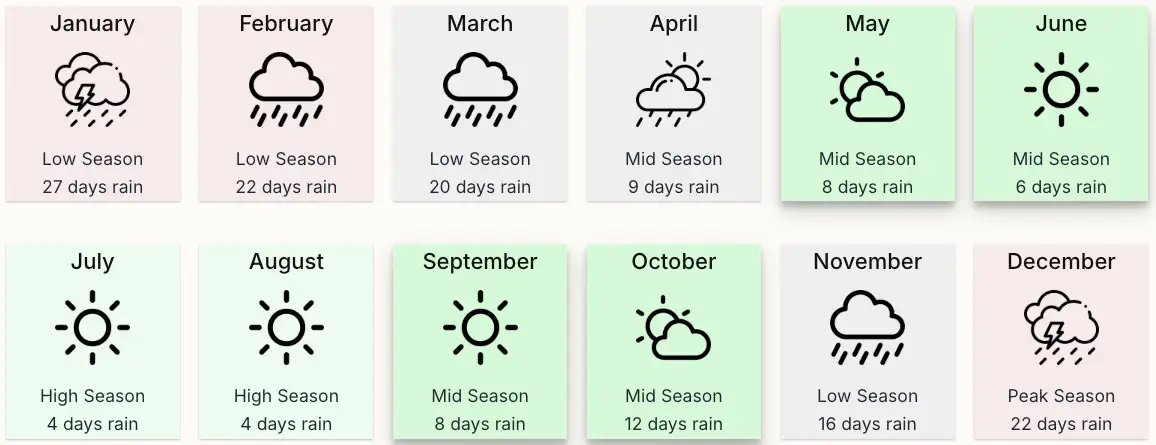
Rain often starts appearing during the months ending in “-ber” — September, October, November, and December. This has become a familiar rule of thumb among locals, who often associate the “-ber” months with the start of the rainy season.
However, September and October 2026 have been unusually dry, with little to no rain in many areas. This has been linked to El Niño conditions, which have contributed to the dry season extending later into 2026.
Things to Do in Bali During Rainy Season: Indoor and Outdoor Activities
Rainy season doesn’t mean staying indoors. There are still plenty of chances to enjoy both indoor and outdoor activities.
1. Pamper Yourself at a Spa

A rainy afternoon is a perfect excuse for a Balinese massage or spa treatment. From affordable local spas to luxury wellness resorts, options are available across popular areas such as Ubud, Canggu, Seminyak, and Sanur.
Treatments commonly include traditional Balinese massage, body scrubs, flower baths, facials, and longer wellness packages.
2. Go Surfing

Yes, you can still surf during Bali’s rainy season. In fact, the wet season can bring good conditions to parts of Bali’s east coast, depending on swell, wind, and tides.
Popular wet-season surfing areas include Serangan, Keramas, Nusa Dua, Sanur Reef, and Green Bowl. Conditions vary considerably by day and surf spot, so always check the latest forecast and ask a local surf school or guide before heading out.
Beginners should choose supervised lessons and beginner-friendly breaks rather than assuming rainy-season waves will always be smaller or easier.
Read More: Best Canggu Beaches for Swimming & Surfing (+Est. Time Travel)
3. Get Muddy on an ATV Ride

A little rain can make an ATV adventure even more fun. Wet tracks, muddy trails, rice fields, forests, and rural landscapes turn the experience into a proper tropical adventure.
Just expect to get dirty, bring a change of clothes, and check conditions with the operator if heavy rain is forecast.
4. Try a Coffee Tasting
Coffee lovers can turn a rainy afternoon into a tasting experience. Bali has a growing specialty-coffee scene where you can explore different beans, brewing methods, and flavor profiles.
We’ve personally visited Blacklist Coffee Roasters in Canggu, and it’s a great option if you want something more interactive than simply ordering a cup of coffee. Their tasting experience lets you sample different brews while learning about the beans, brewing techniques, and flavor notes directly from the barista.

It’s a relaxed way to spend a rainy morning or afternoon while discovering another side of Bali beyond beaches and outdoor attractions.
5. Join a Wellness Class
Rainy days are also a good opportunity to slow down with yoga, Pilates, meditation, or breathwork.
Ubud is particularly well known for wellness experiences. The Yoga Barn, for example, is a major yoga and wellness center in the area.
But don't worry; Canggu, Pererenan, Seminyak, and Uluwatu also have plenty of studios offering drop-in classes.
6. Shop, Dine, and Catch a Movie
If it starts to rain heavily, take some time to explore Bali’s indoor shopping and dining spots. This is actually one of our favorite things to do.
There are plenty of malls in Bali, like Icon Bali Mall in Sanur, Living World in Denpasar, Mall Bali Galeria in Badung, and Beachwalk Shopping Center in Kuta. Each offers great options for shopping, dining, and entertainment, with a mix of local and international brands.
7. Take a Creative Workshop or Cooking Class
Rainy days are a great time to learn something new. Bali has lots of workshops covering silver jewelry making, pottery, painting, traditional crafts, and Balinese cooking. Ubud and Sanur are also good places to look for pottery, jewelry-making, and other hands-on creative workshops.
For food lovers, cooking classes offer more than just "how to make a local meal". You can learn about local spices, traditional cooking techniques, and dishes you can recreate at home. Bumbu Bali Restaurant & Cooking School in Tanjung Benoa is one established option for exploring Balinese cuisine.

When Is the Best Time to Visit Bali? Comparing Dry vs. Rainy Season
Indonesia has a tropical climate with two main periods, shaped by changing equatorial winds:
| Feature | Dry Season (April–October) | Rainy Season (November–March) |
|---|---|---|
| Average Rainfall | Low, around 4–12 rainy days/month | High, around 16–27 rainy days/month |
| Humidity | Low to moderate; generally feels cooler | High; often feels warmer and more humid |
| Landscape | Drier scenery with clear, golden sunsets | Lush greenery and misty tropical landscapes |
| Crowd Levels | Busiest, especially July–August | Generally quieter, except Christmas & New Year |
The best time to visit Bali is from May to August. The weather is usually warm and dry, but these months are also the busiest, especially in popular tourist areas. The worst time to come is January to February, when heavy rainfall is common.
Understanding the Different Climate Zones in Bali
Another important thing to remember is that Bali has several different climate zones because of its dramatic landscape, which ranges from sea-level plains to volcanic peaks over 3,000 meters high.
| Region | Example of Areas | Climate | Temperature | Rainfall & Humidity |
| Southern Coastal Areas | Canggu, Seminyak, Sanur | Classic tropical beach climate; warm and humid year-round | 27–32°C | Moderate rainfall; generally drier than the central highlands |
| Central Highlands & Mountains | Ubud, Bedugul, Kintamani | Cooler and wetter due to higher elevation | 20–27°C | Higher rainfall throughout the year; cool and misty at higher elevations |
| Bukit Peninsula & Nusa Islands | Uluwatu, Nusa Penida | Drier, more arid climate with a longer dry season | Warm year-round | Lower humidity and significantly less rainfall |
The Hidden Upside of the Monsoon
For long-term expats and property hunters, the green season is often seen as a hidden gem for visiting Bali. Here's why:
- Luxury villa rentals and hotels often cut their rates by 20% to 40%.
- Major tourist spots are much less crowded, so you can enjoy the island without heavy traffic.
- Famous landscapes like the rice terraces in Ubud and Sidemen look their most beautiful during this time.
Bali Villa Realty by iLot offers top villas for long-term rental in Bali’s most popular areas. Discover your next favorite stay or contact us for a personalized recommendation.
Conclusion
There’s no single perfect time to visit Bali. The dry season offers more predictable weather, while the rainy season brings greener landscapes, fewer crowds, and plenty of activities beyond the beach.
Whatever season you choose, always check the forecast, stay flexible with your plans, and choose the right area for the experience you want. If you’re planning a longer stay, Bali Villa Realty can also help you find a villa that suits your lifestyle and preferred location.
Contact us for a personalized villa recommendation, no strings attached.
FAQ
BMKG, Windy, and AccuWeather are widely used. Since Bali’s weather can change quickly, many people check more than one source.
January and February are usually the wettest months, with heavier rain, high humidity, rougher seas, and occasional flooding. Late December can also be less ideal due to peak-season crowds and higher prices.
Mid-July to late August is very busy, especially in Canggu, Seminyak, Kuta, and Ubud. Christmas and New Year are even busier, with heavy traffic across southern Bali.
On average, you can expect roughly 3–6 rainy days per month during the dry season. Some weeks may have no rain at all.